Last updated on September 29, 2026
Coconut Cottage Cheese Mousse A light tropical flavored no-bake dessert that is made by processing cottage cheese, coconut milk or coconut cream, vanilla and sweetener. When mixed and chilled, cottage cheese transforms from curdy to something more like a creamy coconut pudding or a soft mousse.
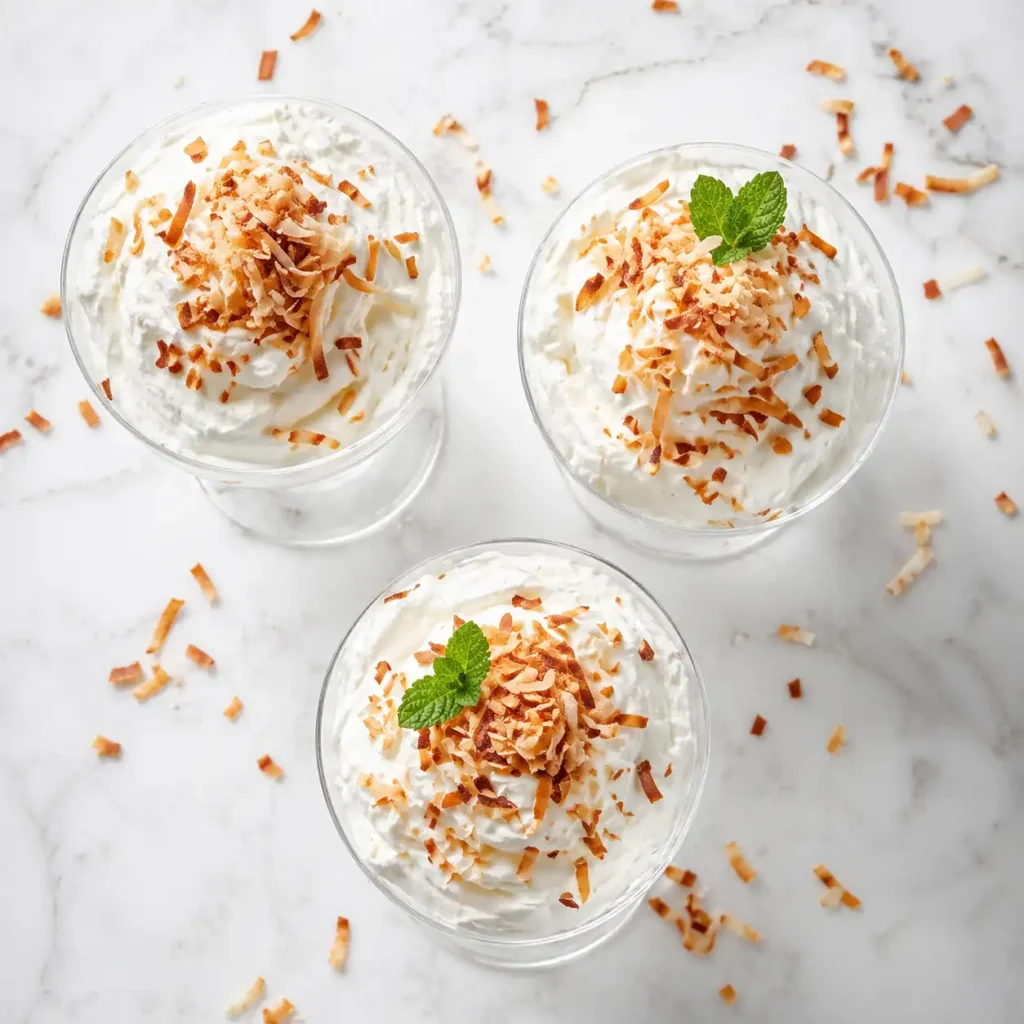
The coconut milk adds richness without overpowering the mild dairy base, and the coconut cream gives a slightly denser, cheesecake-like finish. Each serving has about 14 grams of protein and the active prep time is just five minutes prior to chilling.
If you enjoy this simple blend-and-chill format, my cottage cheese mousse recipes collection brings together 15 creamy flavors built around the same easy dessert method.
Table of Contents
Why This Tropical Protein Dessert Works
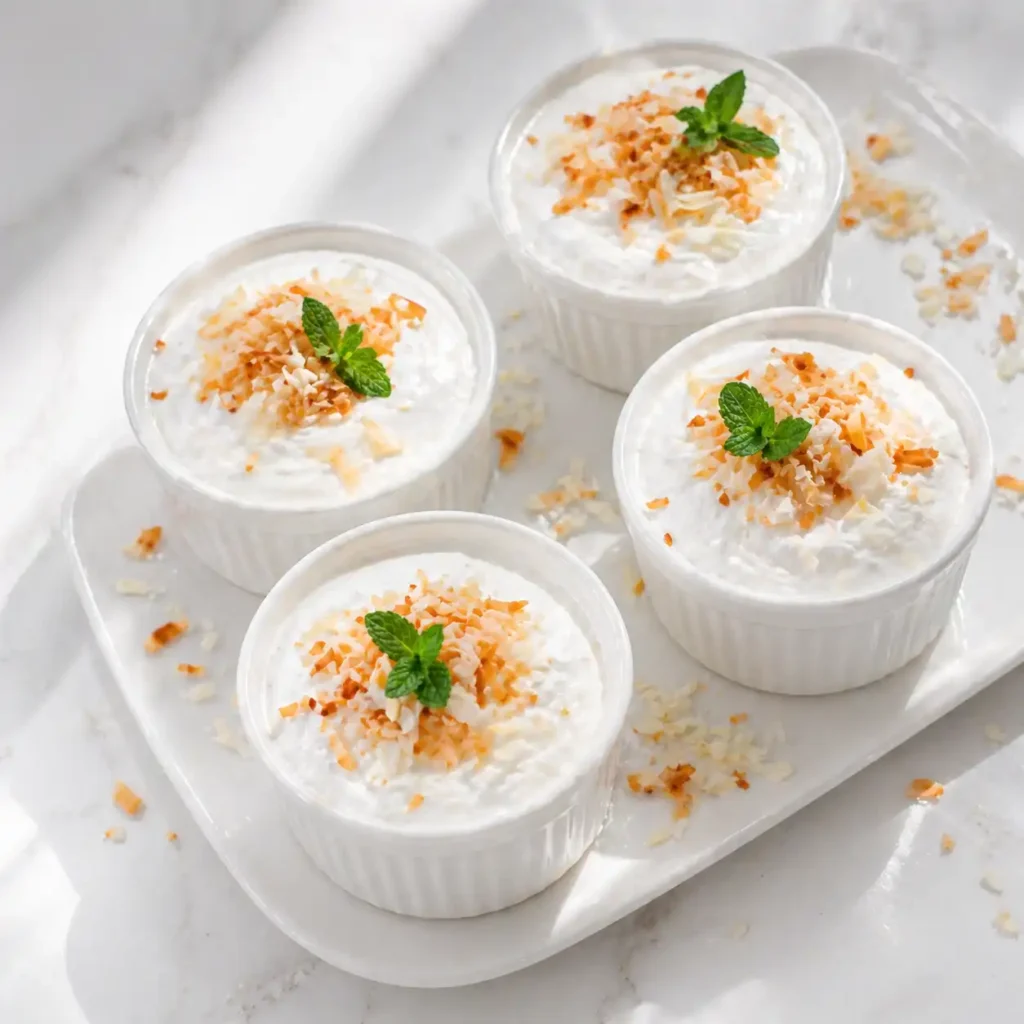
A Creamy Coconut Mousse With a Light Texture
Blending cottage cheese completely smooth creates the structure of this coconut mousse without relying on heavy cream. Coconut milk loosens the base just enough to make it silky, while chilling helps the mixture become thicker and more spoonable.
Coconut Keeps the Creamy Base Light and Tropical
The cottage cheese coconut combination works because the mild dairy base gives the mousse body while coconut adds a softer, tropical flavor. Neither ingredient needs to dominate. Keeping the coconut flavor gentle makes the dessert feel creamy without becoming overly rich or heavy.
Coconut Milk or Coconut Cream Changes the Final Texture
Using coconut milk with cottage cheese creates a softer, lighter mousse, while coconut cream produces a denser finish closer to cheesecake filling. Both work well, so the better choice depends on whether you prefer a light spoonable mousse or a richer dessert.
Coconut Cottage Cheese Mousse
- Total Time: 2 hours 5 minutes
- Yield: 4 servings 1x
Description
This Coconut Cottage Cheese Mousse blends cottage cheese, coconut milk or coconut cream, vanilla, and sweetener into a smooth tropical dessert with about 14 grams of protein per serving. It takes 5 minutes to prepare and becomes thicker after chilling for 1 to 2 hours.
Ingredients
- 2 cups Full-fat cottage cheese (4% milkfat preferred for creaminess)
- 1/4 cup Full-fat coconut milk or coconut cream (Coconut cream yields a denser finish)
- 3 to 4 tablespoons Pure maple syrup, honey, or monk fruit sweetener (adjust to taste)
- 1/2 teaspoon Pure vanilla extract
- 2 tablespoons Toasted coconut flakes (for garnish)
- 1/2 teaspoon Unflavored gelatin (optional, for an extra-firm set)
Instructions
- Blend the Base: Add the full-fat cottage cheese to a high-speed blender or food processor. Blend on high for 1 to 2 minutes, stopping to scrape down the sides with a rubber spatula as needed. Continue blending until the mixture is completely silky smooth and absolutely no curds remain.
- Add Flavor: Add the coconut milk (or coconut cream), your chosen sweetener, and the vanilla extract to the blender.
- Incorporate & Adjust: Blend again for 30 seconds just until the coconut is completely incorporated into the smooth base. Taste the mixture and add an extra tablespoon of sweetener if needed to balance the tanginess of the dairy.
- Portion and Chill: Pour the beautifully blended mousse evenly into 4 small glass jars, elegant tumblers, or ceramic ramekins. Cover tightly and refrigerate for at least 1 to 2 hours to allow the mousse to set and thicken into a soft pudding-like texture.
- Serve: Serve chilled. Top generously with golden toasted coconut flakes right before eating!
Notes
- Texture Tip: Do not rush the blending step! A high-speed blender is your best friend here. Blending for a full two minutes ensures you completely eliminate the cottage cheese texture.
- Choosing Your Coconut: If you want a light, airy mousse, use standard full-fat canned coconut milk. If you prefer a richer, denser, cheesecake-style finish, scoop the solid white cream from the top of the can!
- Make it Sugar-Free: Easily keep this low-carb and keto-friendly by using a powdered monk fruit or stevia sweetener instead of maple syrup.
- Serving Ideas: Dress this up for guests by layering the mousse into parfaits with diced mango, fresh berries, or dark chocolate shavings.
- Prep Time: 5 minutes
- Chill Time: 2 hours
- Category: Dessert / Breakfast
- Method: No Bake
- Cuisine: American
Nutrition
- Serving Size: 1 serving
- Calories: 155 kcal
- Sugar: 9 g
- Sodium: 320 mg
- Fat: 6.5 g
- Saturated Fat: 4.5 g
- Unsaturated Fat: 1.5 g
- Carbohydrates: 11 g
- Fiber: 0.5 g
- Protein: 14 g
- Cholesterol: 15 mg
Ingredients for a Creamy Coconut Mousse
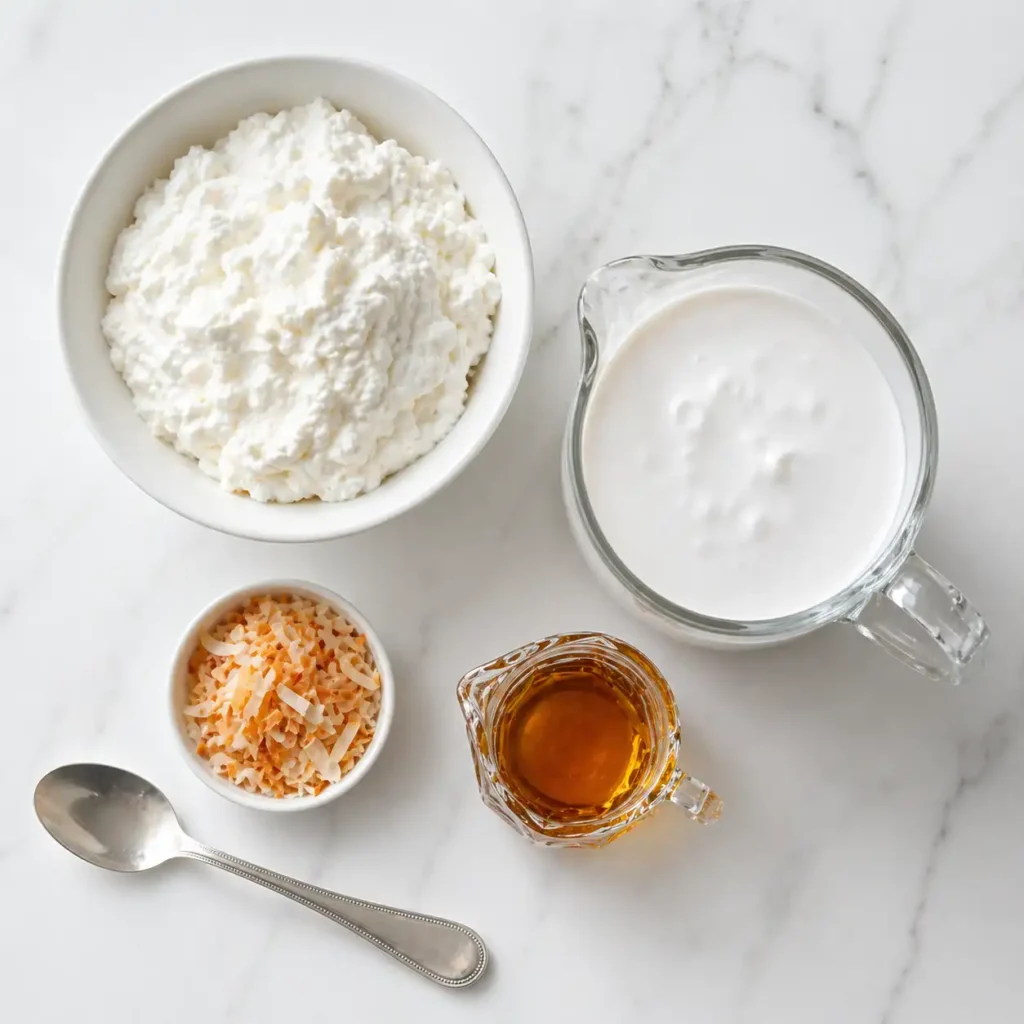
Cottage Cheese Creates the Creamy Base
Thick cottage cheese gives the mousse its creamy structure and helps the mixture stay spoonable after the coconut milk or coconut cream is added. Full-fat or 4% cottage cheese usually gives the richest texture, while lower-fat versions can produce a slightly softer result.
How do I make this dessert creamy and smooth?
Blend the cottage cheese by itself first until no visible curds remain, then add the coconut ingredients and the rest of the flavorings. A high-speed blender usually gives the smoothest result, and scraping down the sides once or twice helps eliminate small lumps.
Cottage cheese also provides most of the protein in this dessert. According to the Harvard T.H. Chan School of Public Health, a half-cup of 4% cottage cheese provides about 14 grams of protein.
Coconut Milk vs. Coconut Cream
Full-fat coconut milk creates a lighter, softer mousse, while coconut cream produces a denser and richer finish. The coconut milk cottage cheese combination works especially well when you want a creamy dessert that still feels light, because the coconut softens the dairy tang without adding too much heaviness.
Choosing the Right Sweetener
Maple syrup works wonderfully for a classic version, while those seeking a low-sugar coconut dessert may strongly prefer a keto-friendly sweetener.
Optional Additions for a Firmer Finish
Depending on the texture goal, you may want more body from thicker coconut elements or a tiny pinch of unflavored gelatin for a more structured, chilled finish.
Quick Reference: Ingredient Roles & Substitutions
| Ingredient | Main Role | Best Choice | High-Value Note |
|---|---|---|---|
| Cottage cheese | Protein base and creamy body | Full-fat or thick cottage cheese | Best starting point for a smoother and richer mousse |
| Coconut milk or coconut cream | Coconut flavor and richness | Full-fat coconut milk for balance | Coconut cream creates a richer, denser finish |
| Sweetener | Balances tanginess | Maple syrup or keto-friendly sweetener | Can be adjusted based on dessert or low-carb goals |
| Vanilla extract | Rounds out flavor | Optional | Helps the mousse taste fuller and softer |
| Toasted coconut | Texture and garnish | Optional topping | One of the most natural serving ideas for this flavor |
| Coconut cream | Dairy-free style swap support | Optional | Useful for readers exploring a dairy-free-style direction |
For another tropical fruit direction, this mango cottage cheese mousse keeps the same creamy blend-and-chill format with a brighter fruit flavor.
How to Make Coconut Cottage Cheese Mousse
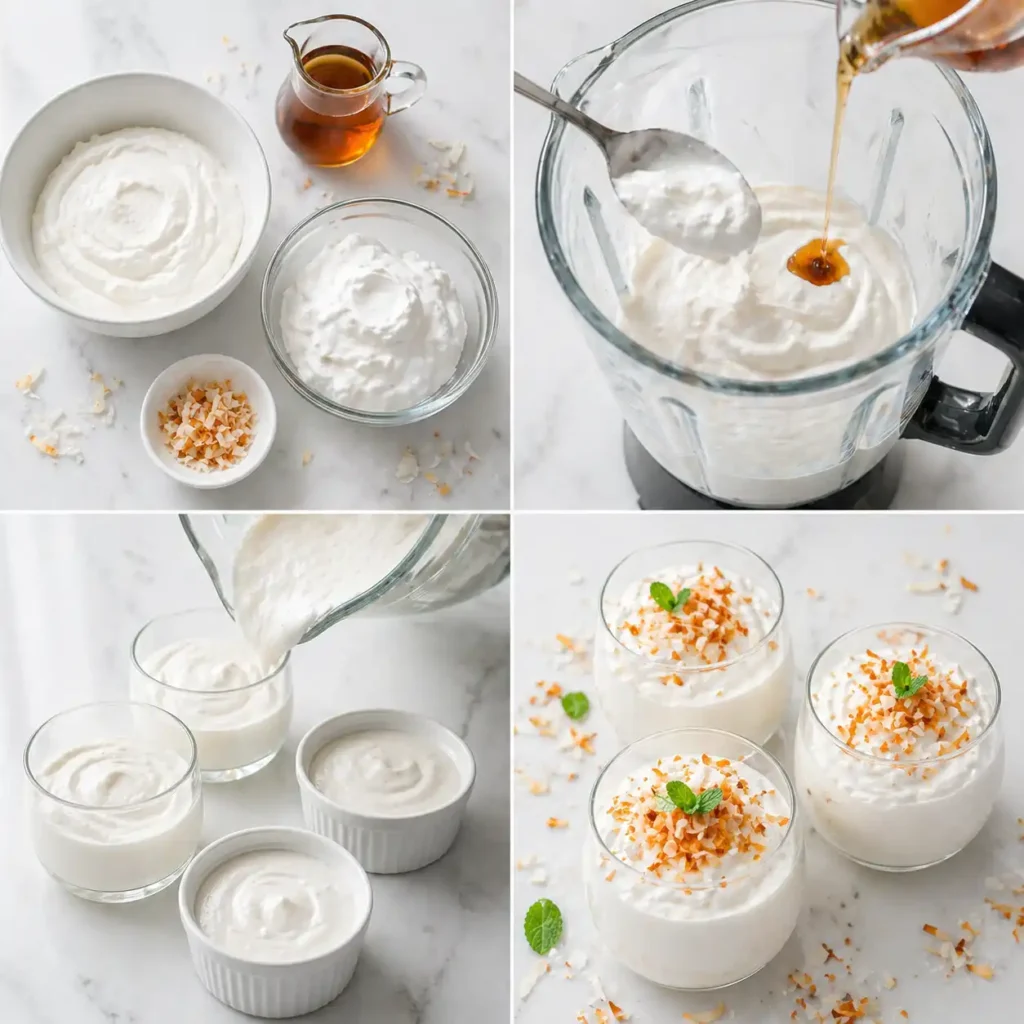
Blend Cottage Cheese Until Completely Smooth
- Action: Place the cottage cheese into a high-speed blender and run it for 1 to 2 minutes.
- Result: This is the most important step for the final texture. The goal is a completely silky mousse with no visible curds left behind.
Add Coconut Milk, Vanilla, and Sweetener
- Action: Add your coconut milk or cream, along with the sweetener, and pulse to combine.
- Result: Too much liquid coconut can loosen the mousse, while too little sweetness can let the tang of the dairy stand out more than the coconut.
Chill until thicker and creamier
- Action: Portion into jars and chill for at least one hour.
- Result: Even if the mixture tastes good right away, a short chill helps it feel more set and much more dessert-like.
For a simpler version built around the same creamy base, this vanilla cottage cheese mousse keeps the blend-and-chill method but lets vanilla take the lead.
Expert Tips for Better Coconut Mousse Texture
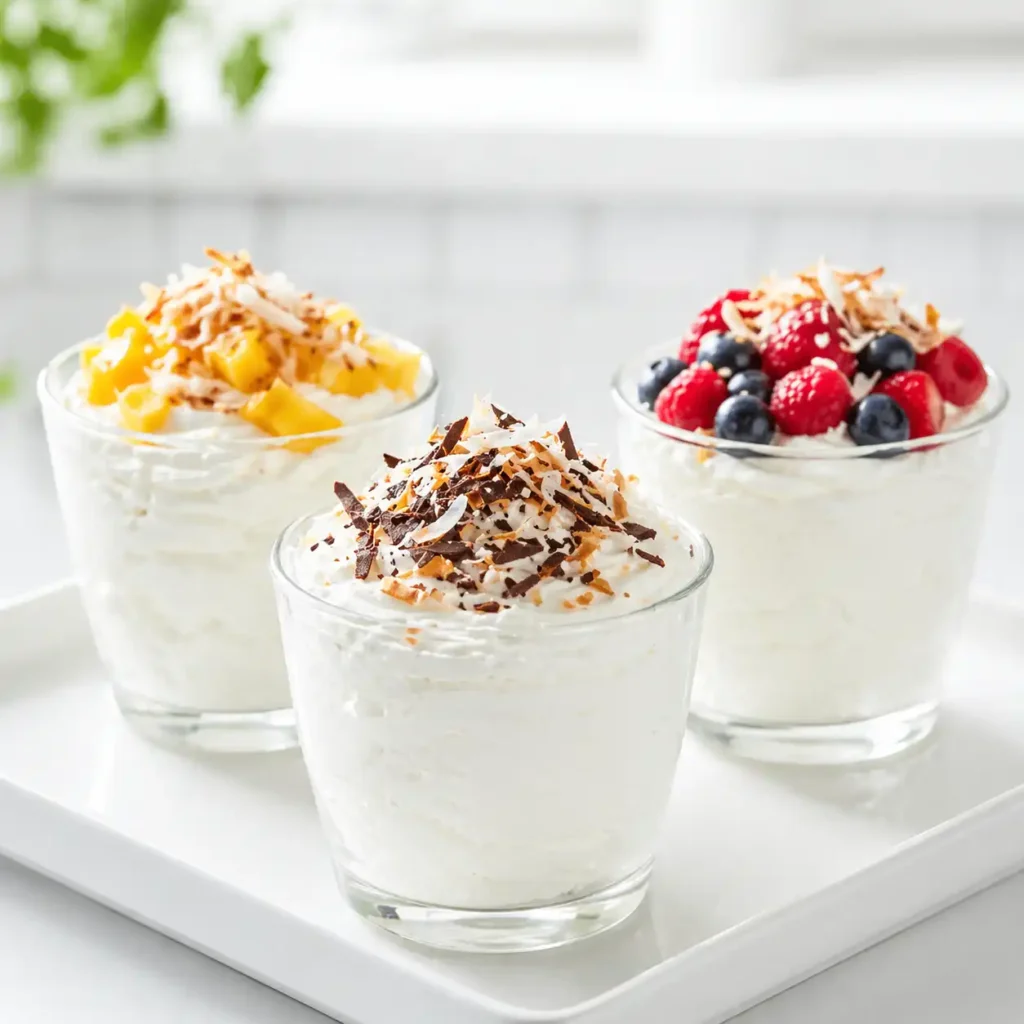
Use Coconut Cream for a Richer Finish
Full-fat cottage cheese and coconut cream usually create the richest, smoothest texture. Coconut milk gives a lighter result, while coconut cream makes the mousse denser and more dessert-like.
Keep toppings separate until serving
Toasted coconut, fresh berries, mango, chocolate shavings, or granola are best added just before serving. Keeping them separate while the mousse chills prevents crunchy toppings from softening and fresh fruit from releasing extra moisture.
Flavor variations work best when the coconut base stays simple
Chocolate, mango, and berries all pair naturally with coconut, but the base works best when you add only one dominant flavor at a time. Too many additions can hide the mild coconut flavor and make the mousse feel heavier.
Banana is another natural pairing with coconut, and this cottage cheese banana pudding uses the same smooth cottage-cheese base in a thicker, fruit-forward dessert.
Can I Make the Mousse Ahead?
Yes. Portion the mousse into covered jars or small containers and refrigerate until serving. Keep toasted coconut, fruit, and other toppings separate so they stay fresh.
For a brighter fruit contrast, this raspberry cottage cheese mousse keeps the same creamy texture with a sharper berry flavor.
More Cottage Cheese Mousse Flavors to Try
Matcha Cottage Cheese Mousse
For another light mousse with a completely different flavor profile, this matcha cottage cheese mousse swaps tropical coconut for earthy green tea while keeping the same easy chilled format.
Chocolate Peanut Butter Cottage Cheese Mousse
If you want something richer next, this chocolate peanut butter cottage cheese mousse moves the same creamy format toward cocoa and peanut butter.
Coconut Cottage Cheese Mousse FAQs
A Simple Tropical Dessert Worth Making Again
The reason Coconut Cottage Cheese Mousse works is that you can make a smooth dessert with a definite coconut flavor from a short list of ingredients, and there is lots of room for flexibility. The creamy, protein-packed base is cottage cheese, with coconut milk to keep it soft and coconut cream for a richer, denser finish if you desire.
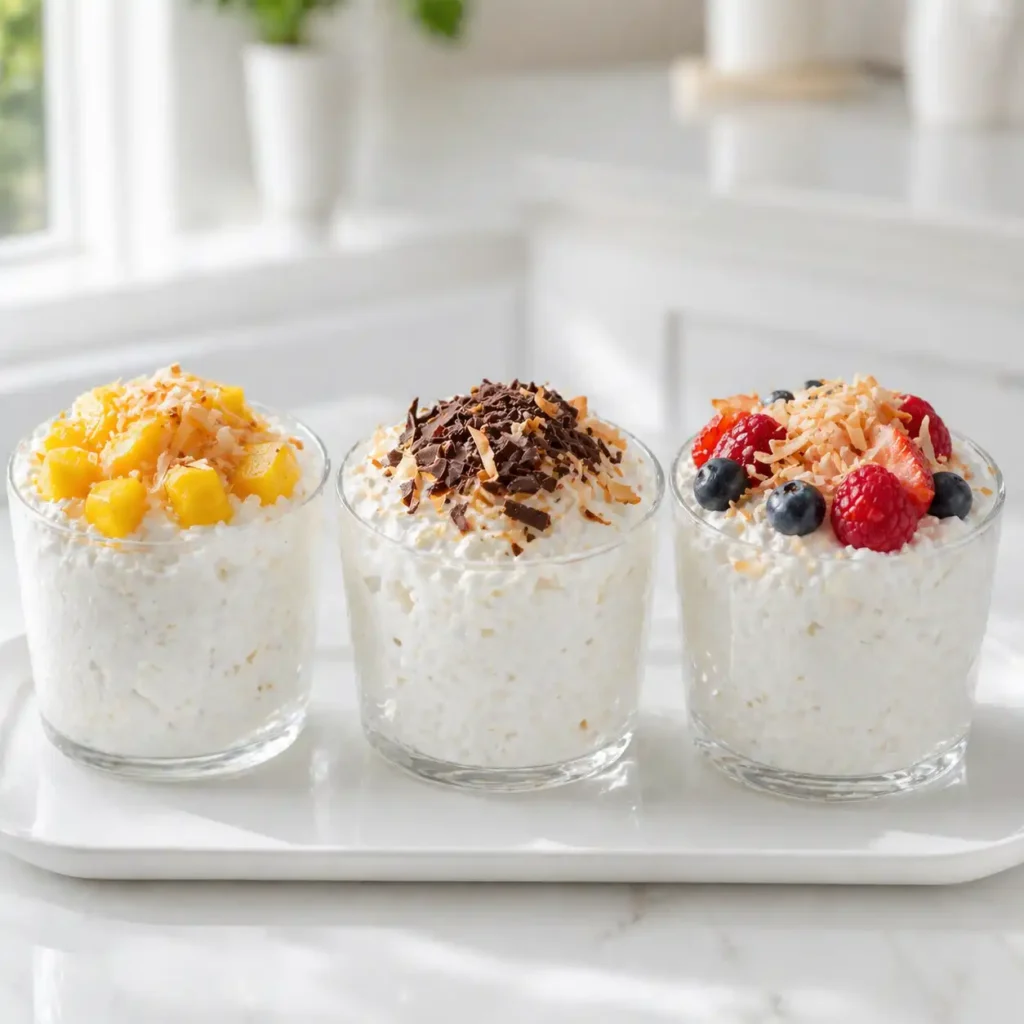
Getting ready takes about five minutes and then chilling does most of the rest. Once set, the mousse is easy to portion for everyday desserts, make-ahead snacks or simple serving cups.