Choosing Golden Broth Turkey Meatballs for your evening meal is one of the smartest shifts you can make for your metabolic health. We’ve all had those nights where we want a “real” dinner—something substantial and filling—but our digestive system feels fragile or sluggish. Maybe you’ve been feeling a bit of “evening puffiness” or joint stiffness after a long week. When this happens, our bodies aren’t just asking for fewer calories; they are asking for an anti inflammatory turkey meatballs solution that is easy to process while we sleep.
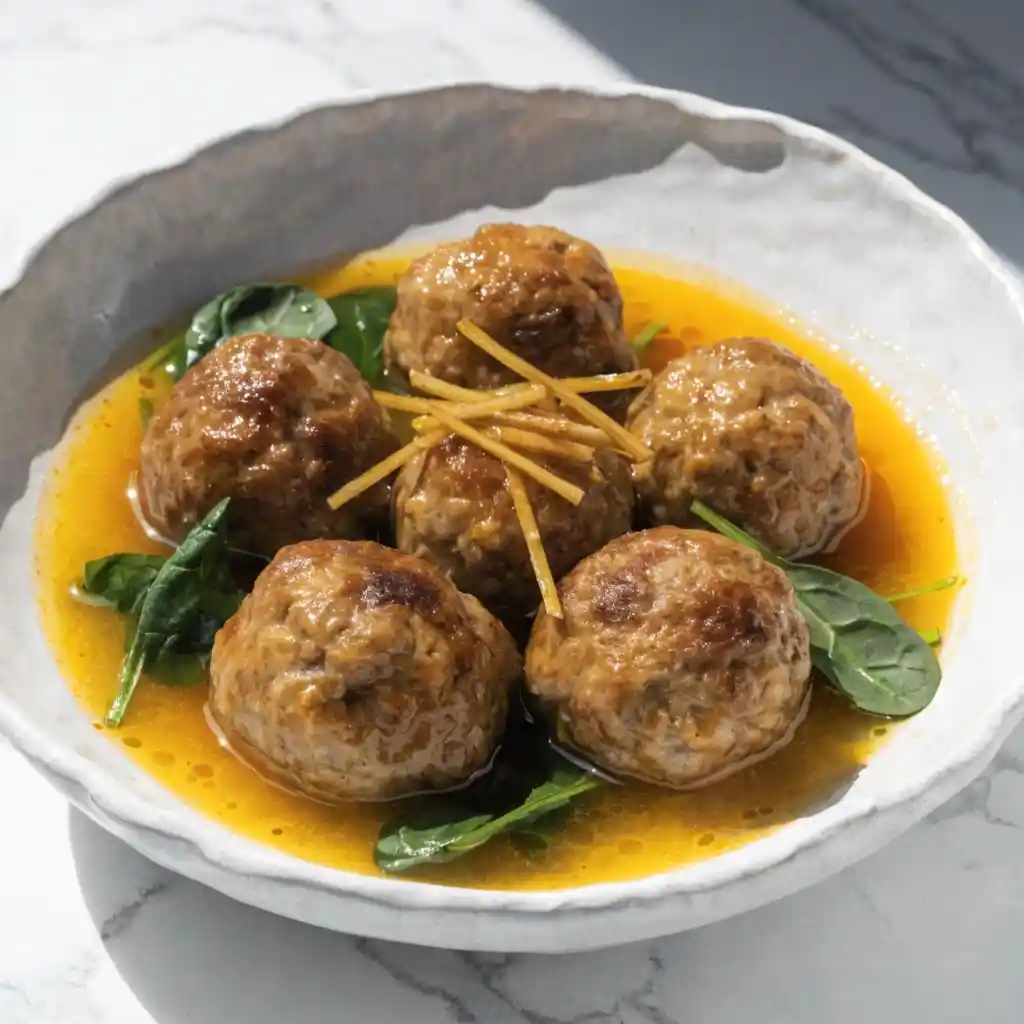
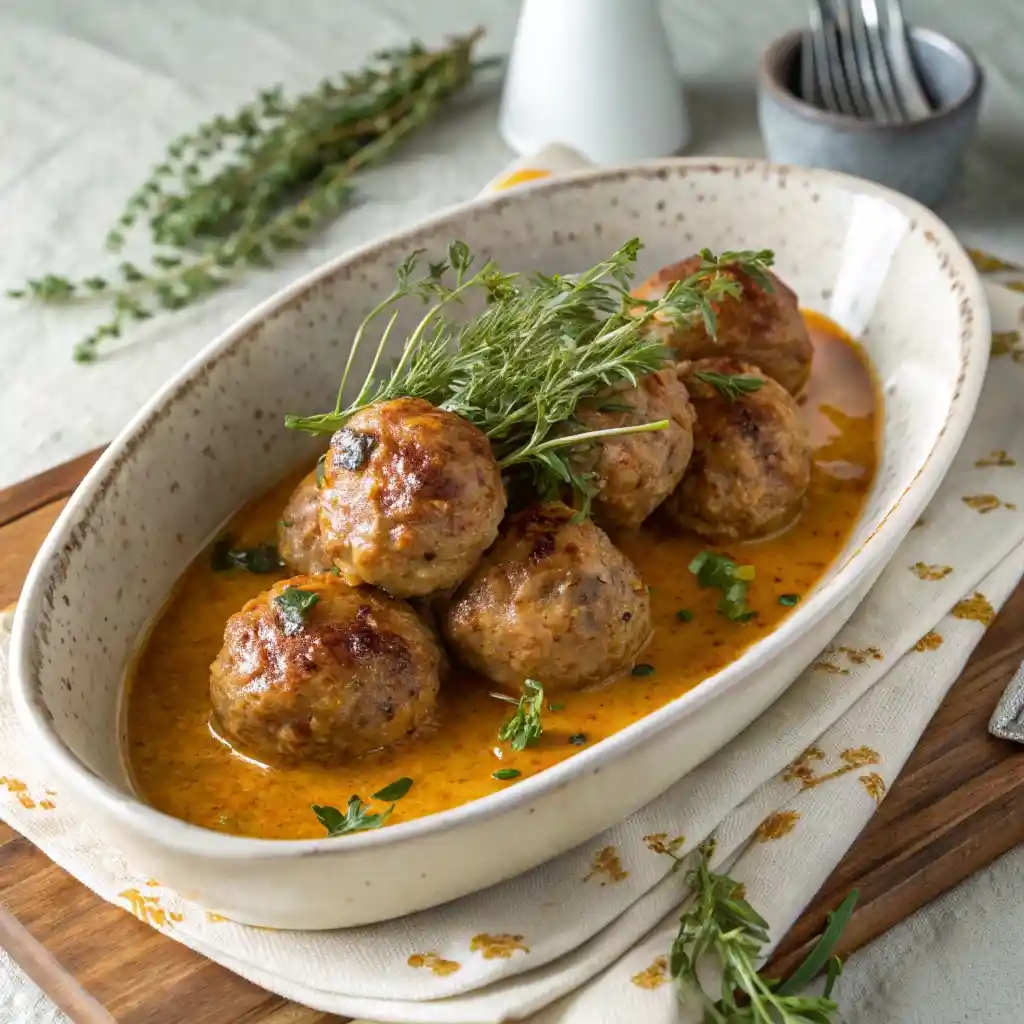
Unlike traditional beef meatballs, which can be high in saturated fats that tax the liver and digestive tract late at night, turkey is a lean, “low-stress” protein. It acts as a perfect vessel for therapeutic spices. In this recipe, we move away from heavy, oil-based frying and instead use a simple poaching method. We simmer these tender meatballs in a “Liquid Gold” base of bone broth, turmeric, and fresh ginger. This method doesn’t just cook the protein; it rehydrates the body and provides a high protein turkey meatballs solution that is naturally soothing. If you’re looking for another 15-minute “Golden” reset, my Turmeric Lemon Cod is the perfect zesty counterpart to this earthy dish.
Table of Contents
Why This is the Ultimate Anti-Inflammatory Choice
When we talk about a “gut-healing” dinner, we are looking at the synergy between the protein and the liquid it’s cooked in. This turmeric turkey meatballs skillet is a functional powerhouse designed to lower systemic stress markers before you head to bed.
The Science of a Gut-Healing Meatball Dinner
The secret to this recipe’s success is the broth. By using a high-quality liquid base, we are able to extract and deliver nutrients in a way that solid food alone cannot. This is why bone broth meatballs have become a staple in modern wellness routines; they combine the satiety of solid food with the hydration and mineral density of a healing soup.
Curcumin for Joint Support: Why we use bone broth to extract maximum benefits
Turmeric is world-renowned for curcumin, but curcumin needs a little help to be effective. By simmering our turmeric turkey meatballs in a warm broth that contains a small amount of healthy fat and black pepper, we increase the bioavailability of the spices. According to research from the National Institutes of Health, curcumin is a fat-soluble compound, so poaching the meatballs in a broth that has a little “Golden Activation” ensures your body can actually use it to support joint health and fight inflammation. The bone broth itself acts as the perfect carrier, allowing the anti-inflammatory properties to reach your system efficiently.
Ginger as a Digestive Aid: Preventing the “post-dinner bloat”
We’ve all experienced that heavy, “stuck” feeling after a big meal. Fresh ginger is a natural prokinetic, which means it helps stimulate the muscles in your gut to keep things moving. By including fresh ginger in our healthy turkey meatballs with sauce, we are essentially providing a digestive insurance policy. It soothes the stomach lining and prevents the fermentation that leads to bloating. Using liquid bases to soothe the gut is also the logic behind my High Protein Tomato Soup.
Turkey vs. Beef for Inflammation
While beef has its place in a balanced diet, it often contains higher levels of certain fats that can trigger an inflammatory response in sensitive individuals, especially when consumed late in the day.
Is ground turkey healthier than beef?
For evening recovery, the lean profile of turkey is a major advantage. It provides the same essential amino acids for muscle repair without the high levels of arachidonic acid found in some red meats, which can be pro-inflammatory for certain individuals. These low calorie turkey meatballs allow you to hit your protein goals without the metabolic “tax” that comes with processing heavier fats. The Mayo Clinic emphasizes that choosing foods with low energy density—like lean turkey—allows you to eat a larger volume of food while consuming fewer calories. This makes it much easier for your liver to process the meal, leading to a flatter stomach by morning.
Print
Golden Broth Turkey Meatballs
- Total Time: 20 minutes
- Yield: 2 servings 1x
Description
These Golden Broth Turkey Meatballs are the ultimate 15-minute gut-healing dinner. By poaching lean turkey meatballs in a “Liquid Gold” base of bone broth, turmeric, and ginger, we’ve created a 45g protein meal that actively fights inflammation and bloating. It is the perfect easy-to-digest skillet meal for supporting metabolic health and joint comfort!
Ingredients
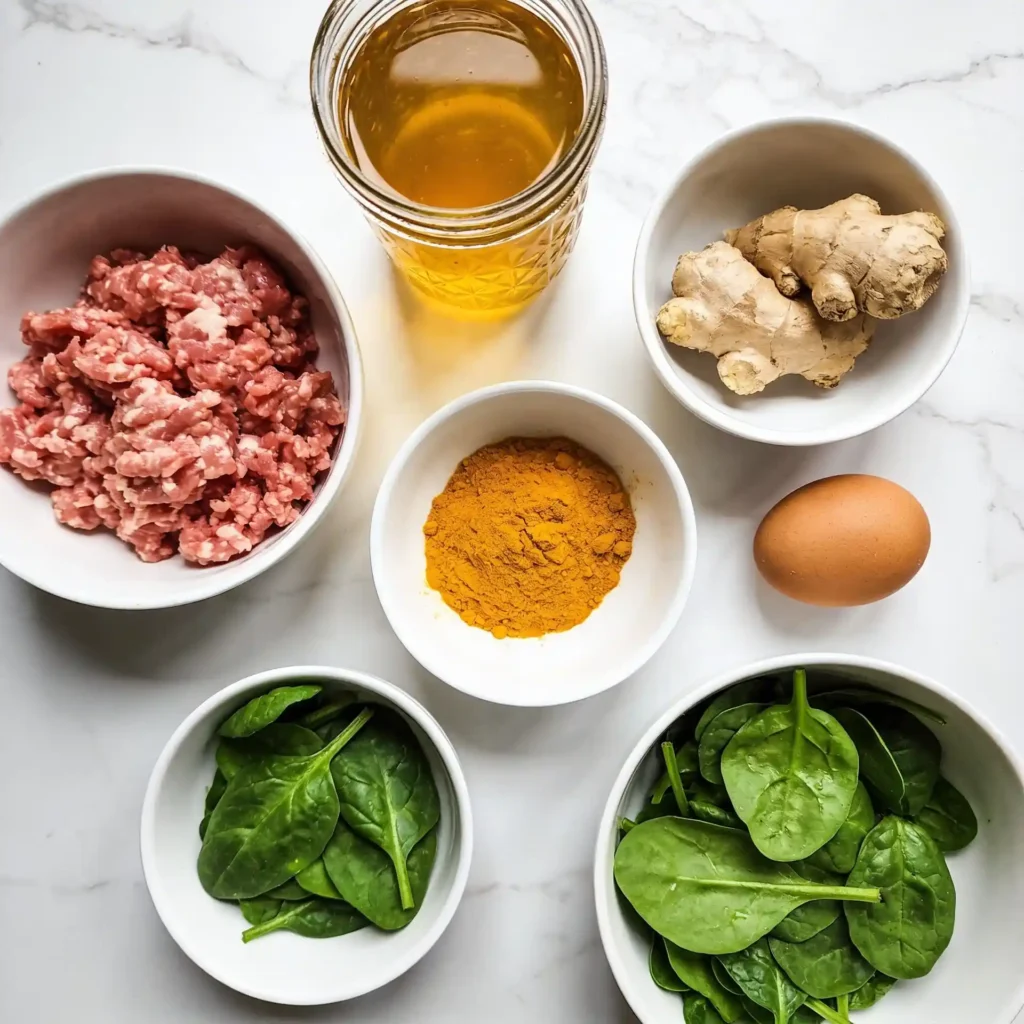
- 1 lb Ground turkey (93% lean)
- 1 large Egg
- 0.25 cup Almond flour (or rolled oats)
- 1 cup Fresh baby spinach, finely chopped
- 0.25 cup Onion, finely grated
- 2 cups High-quality bone broth (Chicken or Beef)
- 1 tsp Turmeric powder
- 1 tbsp Fresh ginger, grated
- 2 cloves Garlic, minced
- 0.5 tsp Black pepper, freshly cracked
- Pinch Sea salt to taste
Instructions
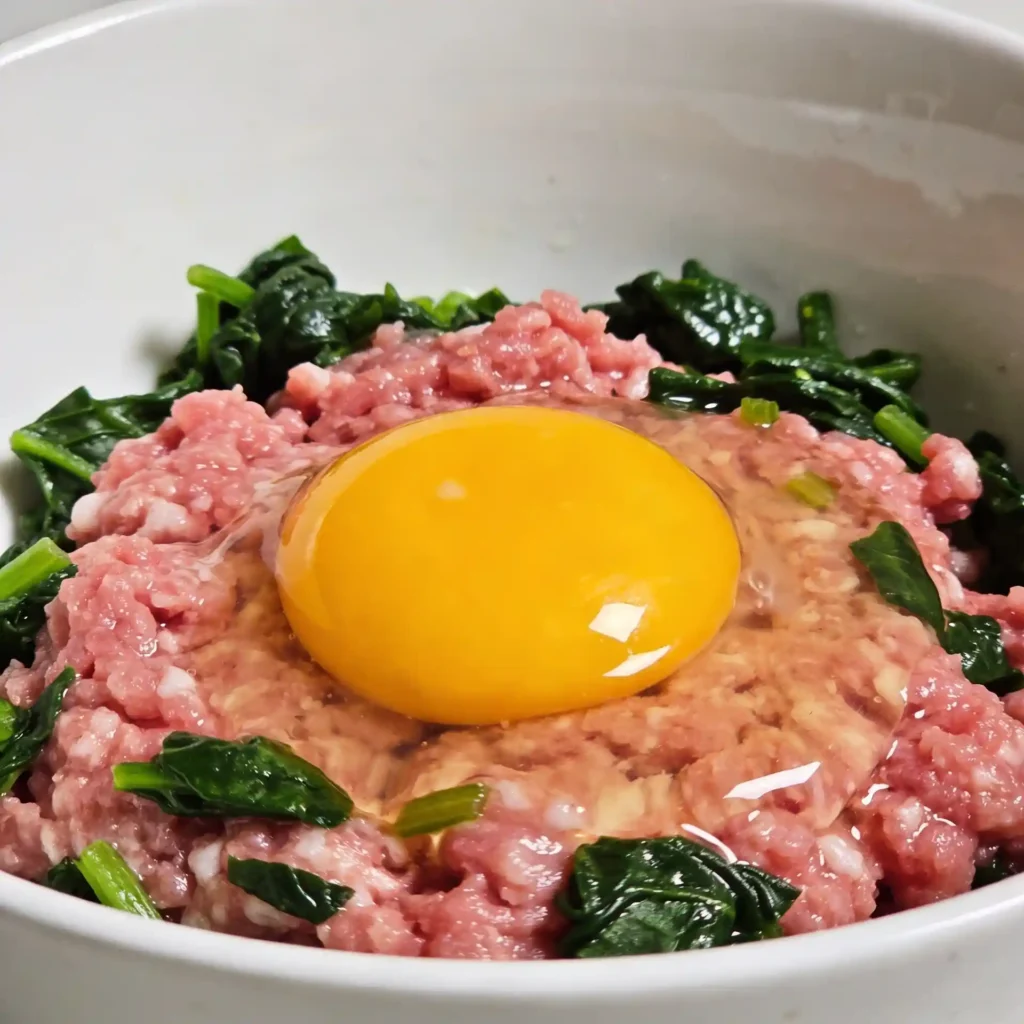
- The Meatball Mix: In a large bowl, combine the ground turkey, egg, almond flour, finely chopped spinach, and grated onion. Mix gently until just combined—don’t overwork the meat!
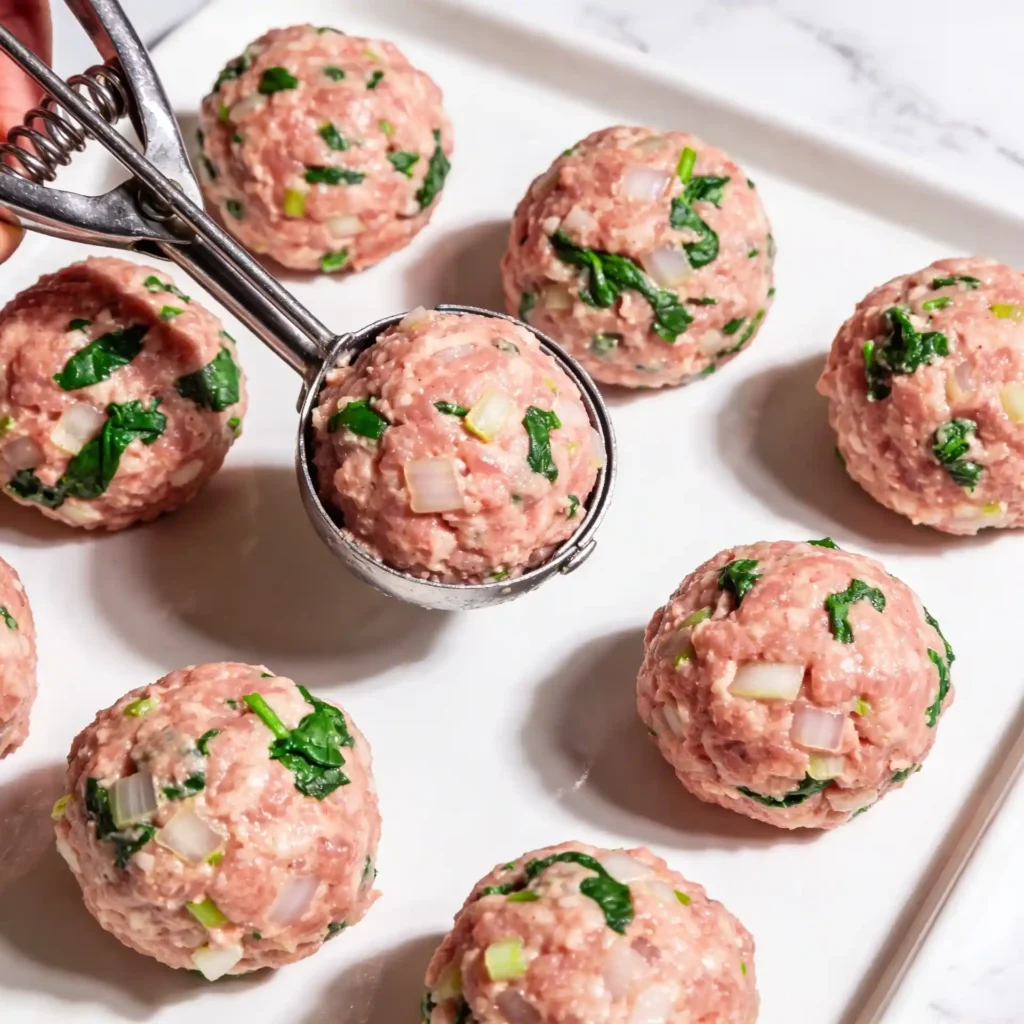
- The Shaping: Shape the mixture into 1.5-inch meatballs (makes about 12-14 meatballs).
- The Golden Broth: In a large skillet or wide pot, whisk together the bone broth, turmeric, grated ginger, minced garlic, and black pepper. Bring to a gentle simmer over medium heat.
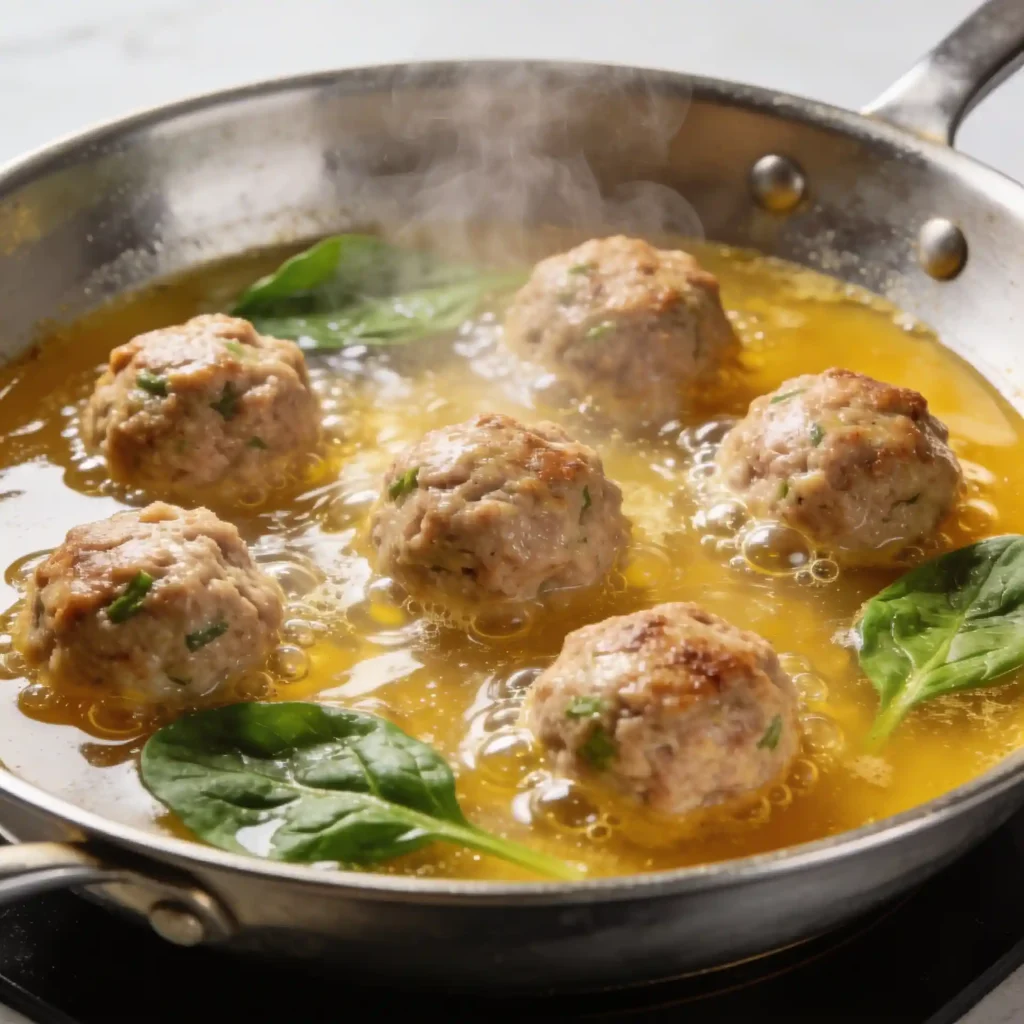
- The Poach: Carefully drop the meatballs into the simmering broth. Cover the pan and simmer for 8-10 minutes.
- The Test: The meatballs are done when they are firm to the touch and float to the surface.
- The Serve: Place a serving of meatballs in a bowl and pour a generous amount of the golden broth over the top.
- Garnish: Top with extra fresh herbs or a squeeze of lime if desired.
Notes
- Bioavailability Tip: Don’t skip the black pepper! It’s essential for your body to absorb the anti-inflammatory curcumin from the turmeric.
- Binder Hack: For extra moisture, you can add 2 tablespoons of blended cottage cheese to the meatball mixture.
- Serving Suggestion: Serve over zucchini noodles or cauliflower rice to soak up all that liquid gold broth!
- Prep Time: 10 minutes
- Cook Time: 10 minutes
- Category: Dinner
- Method: Poached / Simmered
- Cuisine: Modern Anti-Inflammatory
Nutrition
- Serving Size: 1 bowl (6-7 meatballs with broth)
- Calories: 345 kcal
- Sugar: 2g
- Sodium: 540 mg
- Fat: 14g
- Saturated Fat: 3g
- Carbohydrates: 9g
- Fiber: 3g
- Protein: 45g
- Cholesterol: 165 mg
Essential Ingredients for Healthy Turkey Meatballs with Sauce
To build a truly elite high protein turkey meatballs dinner, we focus on ingredients that offer maximum density for minimum digestive stress.
The Protein and Binder Base
The texture of a turkey meatball is often the make-or-break factor. Without the right binders, turkey can become dry and unappealing.
Do you put an egg in turkey meatballs?
Yes, absolutely! An egg is the best natural binder because it provides structure without the need for refined flours. It also adds a small amount of choline and healthy fats, which help with the “Golden Activation” of the turmeric. The egg acts as the glue that keeps the spinach and onion locked inside the meat, ensuring every bite is moist.
What can you use instead of breadcrumbs for turkey meatballs?
To keep these as low calorie turkey meatballs, we want to skip the processed white breadcrumbs. Instead, I love using almond flour or rolled oats. Almond flour adds healthy fats and vitamin E, while oats provide a hit of prebiotic fiber that feeds your “good” gut bacteria. Both options keep the meatballs tender and moist while keeping the glycemic load low, preventing the blood sugar spikes that lead to fat storage.
The “Golden” Broth Components
The broth is where the “healing” happens. We want a base that is as mineral-rich as possible.
Choosing the Best Bone Broth: Why collagen is the secret
When sourcing your broth for bone broth meatballs, look for one that is gelatinous when cold—that’s the sign of high collagen content. Collagen is the “glue” that helps repair the gut lining and supports skin elasticity. It provides a savory depth that water or standard vegetable stock simply cannot match. If you want to see how fresh herbs can further enhance a broth-based dish, you can see how I use them in my Green Goddess Salad.
Fresh Ginger vs. Ground: Maximizing the anti-inflammatory punch
Always reach for the fresh root if you can. Fresh ginger contains higher concentrations of gingerol, the active compound responsible for its digestive benefits. The heat of fresh ginger is also more dynamic, providing a “zing” that helps wake up the earthy notes of the turmeric. If you only have ground ginger, use half the amount, but know that the digestive stimulate will be slightly less potent.
How to Make Golden Broth Turkey Meatballs
Getting these healthy turkey meatballs with sauce on the table takes less time than you think. It’s a rhythmic, soothing process that smells absolutely incredible.
Shaping the Perfect Meatball
The goal is a meatball that is light, juicy, and packed with hidden greens to boost the volume without adding heavy calories.
What to add to Turkey Meatballs to keep them moist?
Because turkey is so lean, we need to “hide” some hydration inside. Finely chopped spinach and grated onion are my secret weapons. As the meatballs poach, the onion releases moisture from the inside out, while the spinach provides a boost of iron and folate. It turns a standard protein into a low calorie turkey meatballs masterpiece. The spinach also adds a beautiful green fleck that makes the “Golden Broth” look like a professional bistro dish.
Achieving the Perfect Size: Ensuring even cooking in the broth
I recommend using a small cookie scoop to keep your meatballs uniform. Aim for about 1.5 inches in diameter. If they are too large, the outside will become tough before the center is cooked; if they are too small, they may break apart in the simmer. Uniformity ensures that every meatball reaches that perfect, tender consistency at the exact same time.
The Poaching Process
This is a much gentler way to cook than frying in a pan with inflammatory seed oils.
How long to boil meatballs in broth? Timing for tender results
Once your golden broth is at a gentle simmer (not a rolling boil!), carefully drop in the meatballs. They usually take about 8 to 10 minutes to cook through. You’ll know they are done when they are firm to the touch and float to the surface. According to the USDA food safety standards, ground poultry should reach an internal temperature of 165°F to be safe, but boiling too aggressively beyond that point will make the turkey rubbery.
Activating the Turmeric: Never forgetting the black pepper
Never forget the black pepper! As you whisk the turmeric into your bone broth, add a generous crack of black pepper. This is the only way to ensure the anti-inflammatory curcumin is bioavailable. As highlighted by the experts at Healthline, this simple pairing is one of the most effective ways to boost nutrient absorption. Without the piperine in the pepper, your body will simply flush the turmeric out. We want every milligram of that healing spice to stay in your system to help with those achy joints and evening puffiness.
Expert Secrets for Juicy Turkey Meatballs
If you’ve struggled with dry turkey in the past, these pro-tips will change the way you cook lean proteins forever.
The Binder Mastery
While egg and almond flour are classic, there is a “protein-stacking” hack that I love for extra moisture and a boost in amino acids.
What is the best binder for Turkey Meatballs?
While eggs are the standard, the “best” binder often depends on your dietary goals. Almond flour is superior for low-carb and keto followers, while oats are better for those needing a bit more fiber. However, if you are looking for the absolute juiciest results, the answer might surprise you.
Can I use cottage cheese as a binder in meatballs?
Yes! Adding 2 tablespoons of blended cottage cheese to your meatball mix is a high-protein hack for extra moisture. It adds a beautiful creamy texture and extra leucine (an amino acid great for muscle repair) without changing the savory flavor. It makes your high protein turkey meatballs even more nutrient-dense.
The “Secret” Texture Ingredient
What’s the secret ingredient in meatballs?
If you want a meatball that feels light as air, try adding finely grated zucchini. Much like the onion, zucchini provides “hidden hydration.” Because zucchini is 95% water, it creates tiny pockets of steam inside the meatball as it poaches, preventing the turkey from ever becoming dense or chalky. Properly browning or poaching protein is a skill I also cover in my Sheet-Pan Pesto Salmon guide.
Customizing Your Metabolic Reset Dinner
The beauty of a bone broth meatballs dinner is that it can be adapted to whatever you have in your fridge or your specific protein preferences.
Protein and Herb Swaps
Which is higher in protein, chicken or ground turkey?
They are actually very similar! Ground turkey usually has a slight edge in some micronutrients like selenium and zinc, but chicken is also a fantastic lean choice. In most cases, they both offer about 22-24g of protein per 4oz serving.
Which is healthier, chicken or Turkey Meatballs?
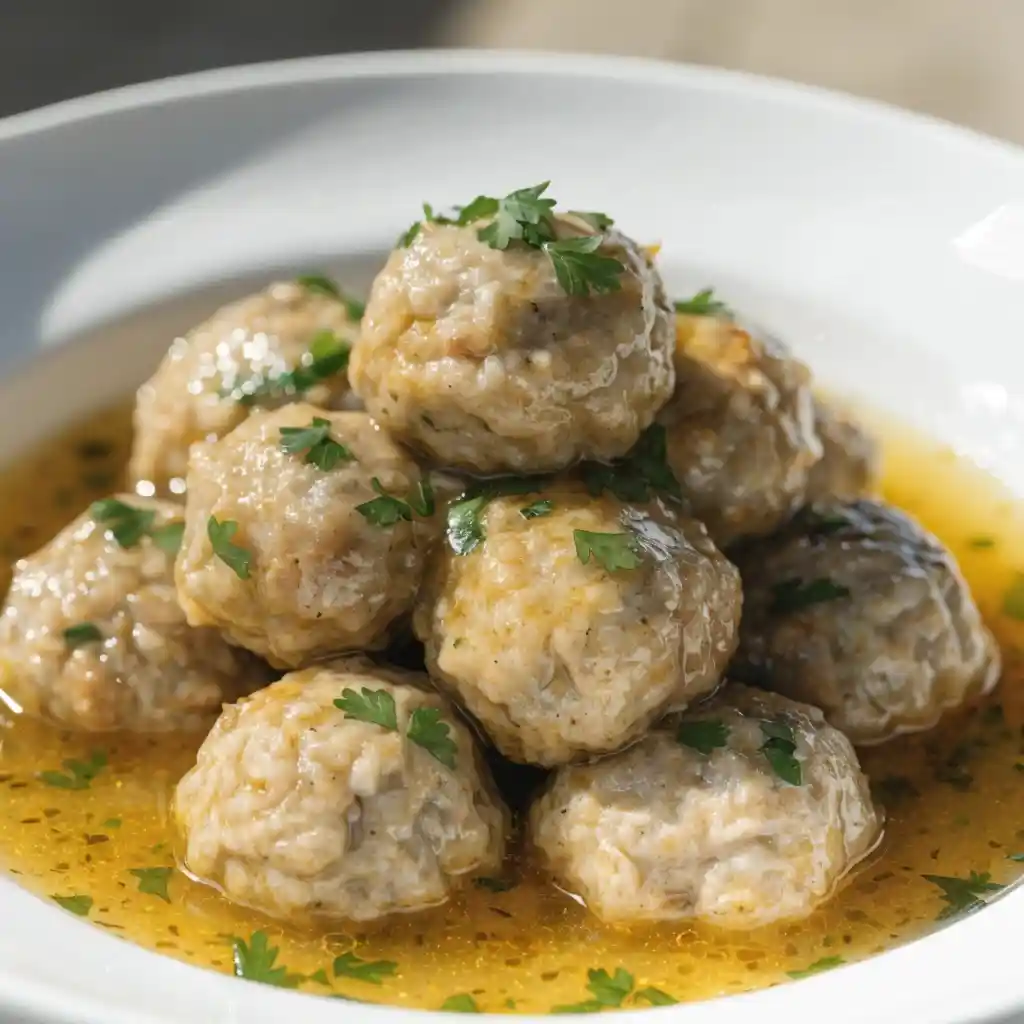
Both are excellent choices for an anti inflammatory turkey meatballs style dinner. The “healthiest” choice is the one that is sourced from pasture-raised animals without added fillers. If you find ground chicken is more accessible, use it! The poaching method in the “Golden Broth” works identically for both.
What to Serve With Golden Broth
To keep this meal low-carb and gut-friendly, I recommend serving the meatballs and broth over a light, hydrating base.
Serving over Vietnamese Chicken Zoodle Salad base
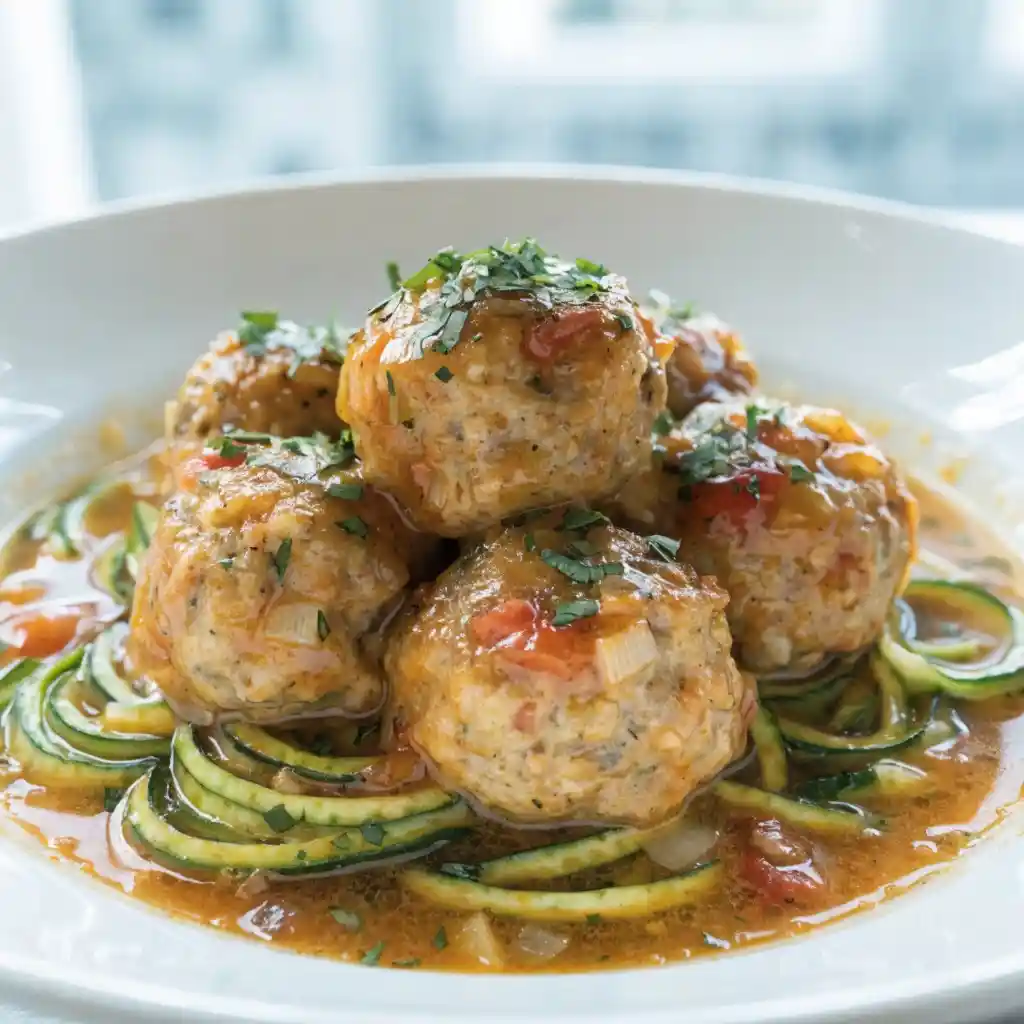
Serve the meatballs over the base of my Vietnamese Chicken Zoodle Salad (simply omit the chicken). The warm broth will slightly wilt the zucchini noodles, creating a healing “pho” style experience that is zero-bloat and high-volume.
Pairing with Roasted Sweet Potato Black Bean Bowl leftovers
If you’ve had an active day and need more carbohydrates for recovery, pair these with a few leftover components from my Roasted Sweet Potato Black Bean Bowl. The sweetness of the potatoes pairs beautifully with the turmeric and ginger broth, creating a more grounding meal.
High Protein Turkey Meatballs FAQ
Are turkey meatballs actually healthy?
Yes! When you make them at home with fresh herbs, lean protein, and no refined binders, they are a nutrient-dense powerhouse. The low calorie turkey meatballs we’re making today are high in protein and low in inflammatory fats, making them a perfect choice for those focused on longevity.
Are Turkey Meatballs high in protein?
Absolutely. This specific recipe provides 45g of protein per serving, which is the “gold standard” for muscle maintenance and satiety. This helps stabilize blood sugar and prevents late-night cravings.
Are meatballs good for a high protein diet?
Meatballs are a perfect “meal prep” item for a high-protein diet. You can make a large batch and freeze them for easy, anti inflammatory turkey meatballs lunches later in the week. They reheat beautifully in a little bit of extra broth.
What is the healthiest alternative to breadcrumbs?
Almond flour, flax seeds, or even a small amount of cooked quinoa are the best alternatives for anyone looking to avoid gluten or refined carbs. They provide a better nutrient-to-calorie ratio than traditional breadcrumbs.
Conclusion
This Golden Broth Turkey Meatballs dinner is the ultimate “Digestive Comfort” meal. By combining lean protein with the healing power of bone broth and anti-inflammatory spices, you are giving your body a chance to rest and recover from the day’s stressors. It’s a dinner that feels like a hug for your gut and a reset for your metabolism.
For more easy-to-digest, high-protein inspiration, explore my High Protein Lunch Ideas. By choosing meals that prioritize your internal health, you’re setting yourself up for long-term vitality. Happy simmering!