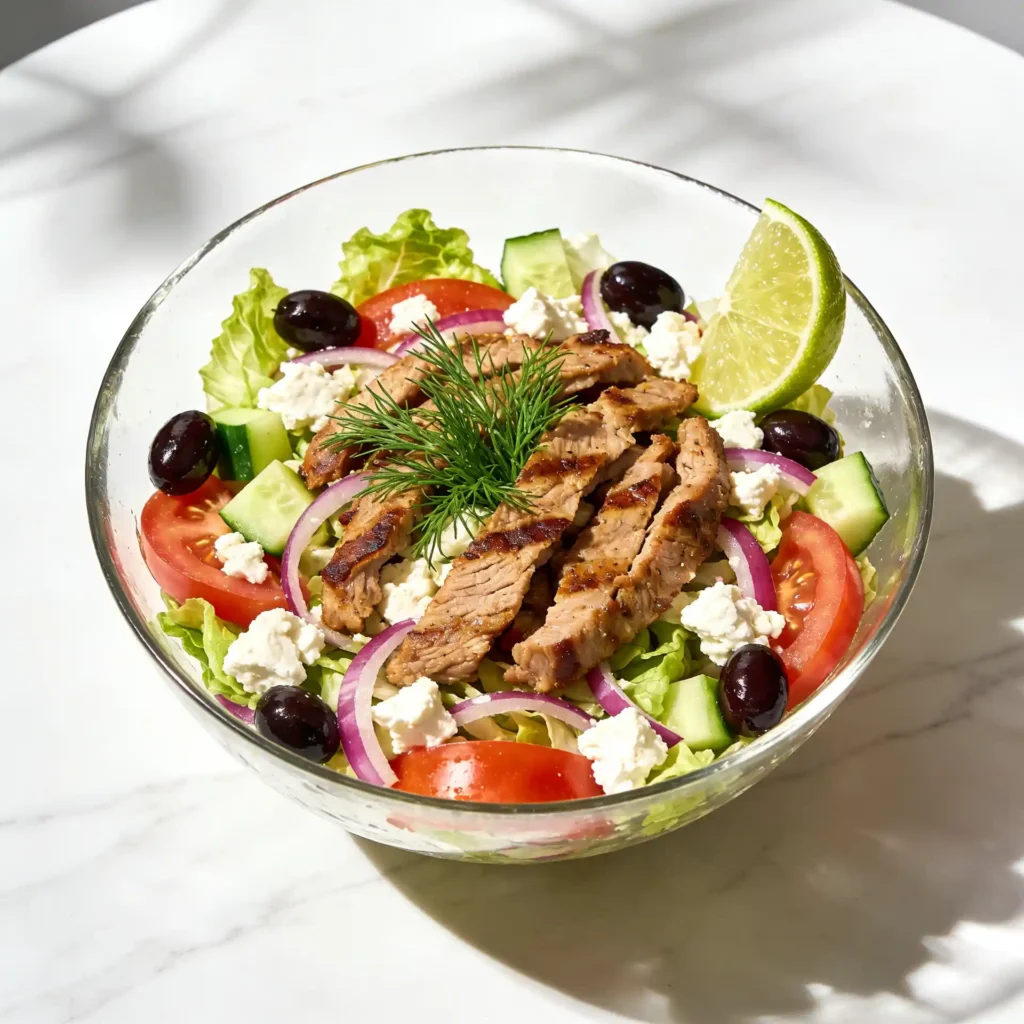
Greek Gyro Salad prep is the ultimate way to enjoy the savory, herby flavors of a classic street-food gyro without the heavy, carb-laden pita bread that traditionally defines the experience. While the traditional gyro is a masterpiece of Mediterranean-style assembly, the bread often adds unnecessary refined sugars and empty calories that lead to a lethargic afternoon. By shifting our focus to a deconstructed format, we can maximize the micronutrient density of the meal while keeping the “comfort food” soul of the dish intact. This recipe represents the pinnacle of functional eating—satisfying deep, savory cravings while fueling your body with the clean energy it needs to perform at its best.
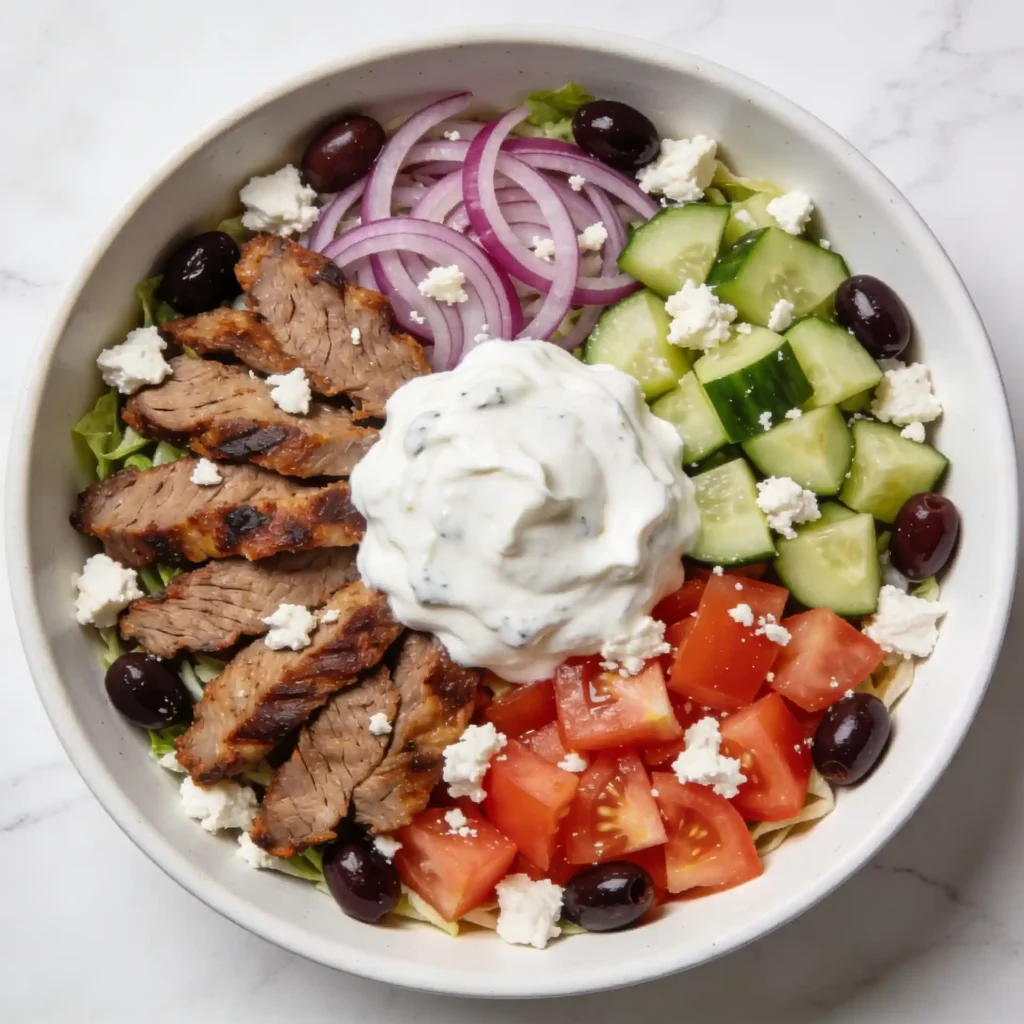
To prepare this recipe effectively, you simply need to marinate your lean protein—whether it be beef, lamb, or chicken—in a bright mixture of fresh lemon and oregano before searing it in a hot cast-iron skillet to get those iconic “off-the-spit” crispy edges at home. This simple culinary technique creates a deeply satisfying, bistro-style lunch that mimics the flavor of a professional rotisserie without the need for specialized equipment. This is the perfect high protein greek gyro salad for a satisfying, bistro-style lunch that supports muscle recovery and metabolic health. We are proud to feature this as a centerpiece in our master guide of 31+ Best High Protein Salad Recipes, as it embodies the perfect balance of flavor, volume, and nutrient-rich macros.
Table of Contents
Is a Gyro Salad Healthy for Weight Loss?
Is gyro salad for weight loss better than a traditional gyro wrap?
If you are looking for a gyro salad for weight loss, the answer lies in the “Protein-to-Volume Ratio.” A traditional gyro wrap relies heavily on thick, oil-brushed pita bread, which can add upwards of 300 calories of refined carbohydrates before you even consider the meat or sauce. By swapping that bread for a massive bed of crisp Romaine lettuce and Persian cucumbers, you get triple the physical volume for less than half the calories. This triggers the stretch receptors in your stomach to signal fullness more effectively, a strategy known as “Volume Eating.” I use this same volume-eating logic in my Mediterranean Power Bowl, where we focus on high-density vegetables to create massive, satisfying portions that support a caloric deficit without the physical sensation of deprivation.
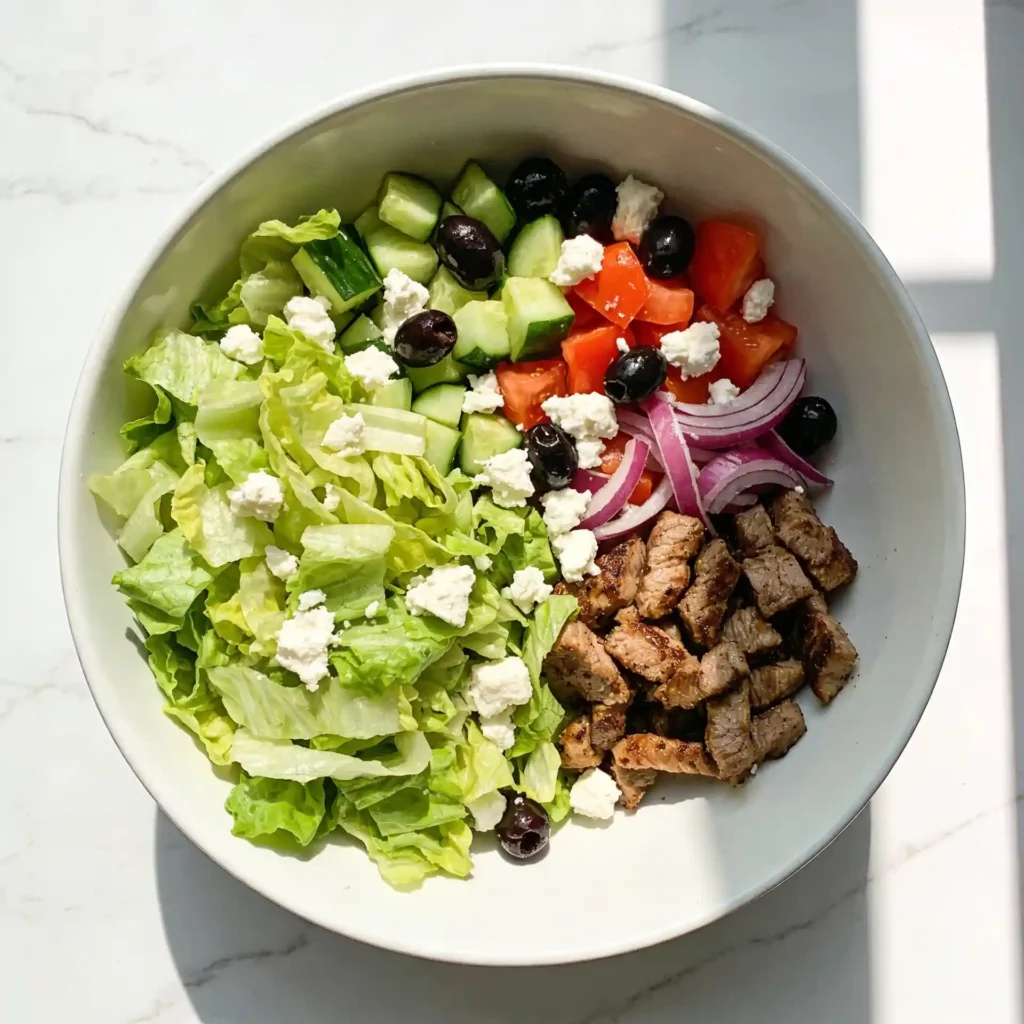
Comparing low calorie mediterranean gyro bowls to restaurant versions
A common mistake is assuming that any “Mediterranean” bowl at a fast-casual restaurant is an automatic win for your weight loss goals. Many commercial versions are loaded with hidden fats from heavy oil-based marinades and high-sodium processed meats. A restaurant-style greek chicken gyro salad can easily exceed 900 calories due to these hidden additives and excessive portions of full-fat feta cheese. Making a healthy mediterranean gyro bowl at home allows you to control the thermic effect of protein by using lean cuts and a zero-fat yogurt emulsion for the dressing.
According to the British Heart Foundation, reducing saturated fat and focusing on lean proteins is a primary pillar of cardiovascular health. By focusing on amino acid density and utilizing culinary acidulation (using lemon juice instead of oil), you avoid the caloric density common with restaurant food. This approach significantly improves your score on the satiety index, helping you stay full for hours and making it a superior gyro salad for weight loss option that fuels muscle repair while helping you lean out effectively.
Print
High Protein Greek Gyro Salad
- Total Time: 30 minutes
- Yield: 2 servings 1x
Description
This High Protein Greek Gyro Salad is the ultimate “breadless” alternative to classic street food. By utilizing a “Micro-Chop” and the “Greek Yogurt Tzatziki Hack,” we’ve created a massive 45g protein meal that delivers crispy, seared vibes in a healthy format. It is the perfect healthy mediterranean gyro bowl for weight loss and sustained energy!
Ingredients
- 1 lb Lean beef or lamb strips (or chicken breast), thin-cut
- 1 tbsp Fresh lemon juice (plus more for garnish)
- 1 tsp Dried oregano
- 2 cloves Garlic, minced
- 4 cups Romaine lettuce, finely chopped
- 1 cup Persian cucumbers, diced (Micro-Chop)
- 1 cup Roma tomatoes, diced
- 0.25 cup Red onion, thinly sliced
- 0.25 cup Feta cheese, crumbled
- 8–10 Kalamata olives, sliced
- 1 cup 0% Non-fat Greek yogurt (plain)
- 0.5 medium Cucumber, grated and squeezed dry
- 2 tbsp Fresh dill, chopped
- Pinch Salt and black pepper to taste
Instructions
- The Marination: In a small bowl, toss your meat strips with 1 tbsp lemon juice, 1 tsp oregano, and 2 cloves of minced garlic. Let marinate for 20 minutes to tenderize.
- Make the Tzatziki: In a separate jar, whisk together the Greek yogurt, squeezed-dry grated cucumber, and fresh dill. Season with a pinch of salt and pepper. Refrigerate until serving.
- The Sear: Heat a cast-iron skillet over high heat. Add the meat strips and sear for 3-4 minutes per side until they develop crispy, brown edges (Maillard reaction). Let rest for 5 minutes.
- The Base: Place 2 cups of chopped Romaine lettuce into two large bowls.
- The Micro-Chop: Layer the diced cucumbers, Roma tomatoes, and red onion over the greens.
- The Salty Pop: Sprinkle with crumbled feta cheese and Kalamata olives.
- The Crown: Place the warm, seared gyro meat in the center of each bowl.
- Dress & Serve: Top with a generous dollop of the Greek yogurt Tzatziki and an extra squeeze of fresh lemon.
Notes
- Meal Prep: Store the seared meat and Tzatziki in separate containers. Assemble the fresh veggies just before eating to maintain maximum crunch and prevent oxidative browning.
- Cucumber Hack: Use a kitchen towel to squeeze every drop of water out of your grated cucumber. This is the secret to a thick, professional sauce.
- Protein Stacking: Add a handful of chickpeas to this bowl for extra fiber and plant-based protein stacking.
- Prep Time: 20 minutes
- Cook Time: 10 minutes
- Category: Lunch
- Method: Seared / Chopped
- Cuisine: Greek-American
Nutrition
- Serving Size: 1 bowl
- Calories: 410 kcal
- Sugar: 5g
- Sodium: 740 mg
- Fat: 5g
- Saturated Fat: 9g
- Carbohydrates: 22g
- Fiber: 6g
- Protein: 45g
- Cholesterol: 95 mg
Ingredients for a High Protein Greek Gyro Salad
The success of a healthy mediterranean gyro bowl depends on the harmony between the “Warm Protein Core” and the “Cold Volume Mix-ins.” Each component must be selected for its ability to provide maximum crunch and nutrient density.
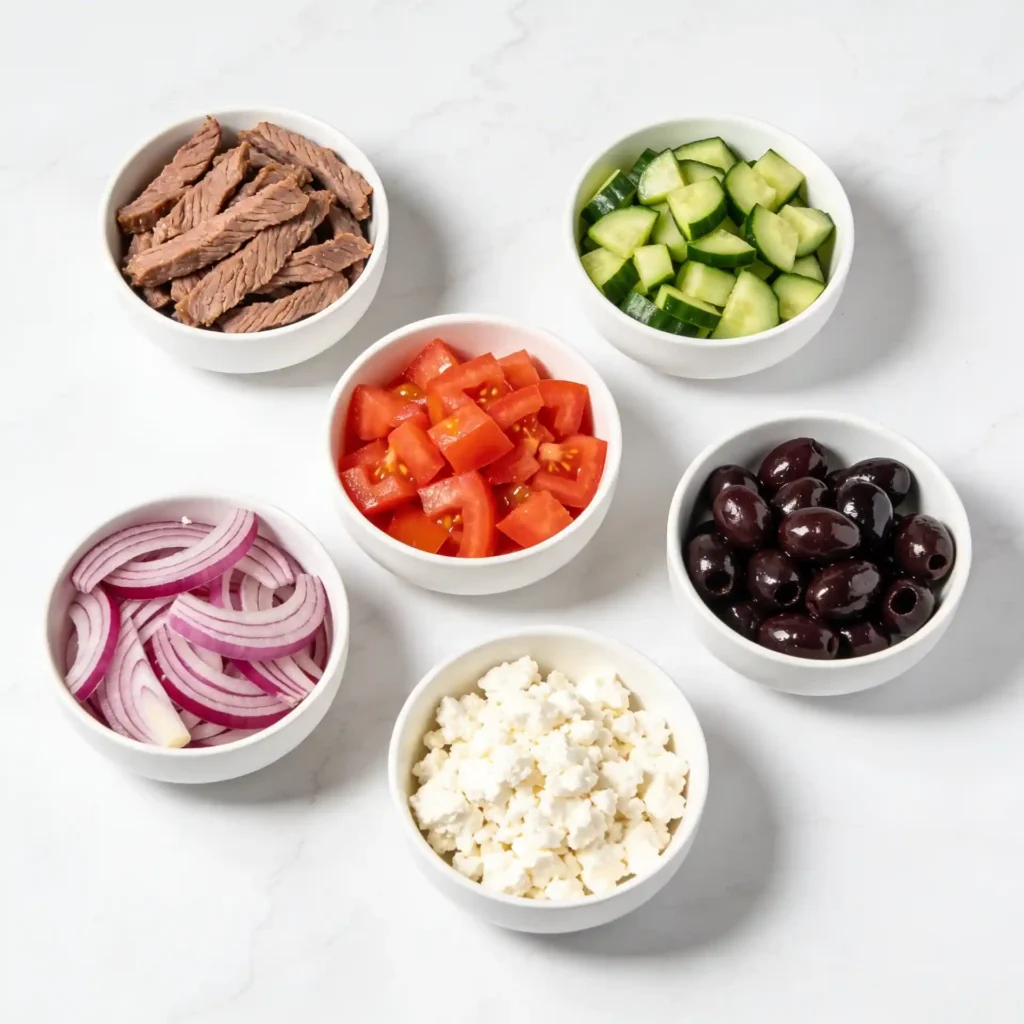
What ingredients are in a healthy gyro salad?
To build the foundation of this bowl, you need ingredients that offer maximum volume for minimum calories. We aren’t just tossing things in a bowl; we are choosing items that provide that signature Mediterranean “pop” while ensuring your macros are balanced.
- The Protein: Selecting Lean Beef, Lamb, or Chicken To hit your 45g protein goal, selecting the right meat is essential. Look for 90% lean ground beef or thinly sliced lamb leg to keep saturated fat low while maintaining traditional flavor. For a faster version, you can use the rotisserie refresh tips from my Sonoma Chicken Salad to quickly season pre-cooked poultry with Mediterranean spices. This is a game-changer for mid-week High Protein Greek Gyro Salad prep when you have zero time to cook from scratch.
- The Volume Mix-ins: Persian Cucumbers, Roma Tomatoes, and Red Onion These water-rich vegetables are the foundation of your volume-eating strategy. Persian cucumbers offer the best snap because they have fewer seeds and thinner skin. I recommend borrowing the veggie dicing tips from my Mediterranean Chickpea Salad to ensure your base remains crisp and vibrant for days. According to the World Health Organization (WHO), a diet rich in a variety of vegetables is crucial for preventing non-communicable diseases.
- The “Salty Pop”: Feta Cheese and Kalamata Olives These ingredients provide the umami that makes the healthy gyro salad recipe feel authentic. A small amount of high-quality feta provides the briny finish we crave without significantly impacting the calorie count. I mention the same feta pairing strategy in my Watermelon Feta Salad with Chicken to ensure the saltiness is a highlight without overwhelming the macros of the bowl.
By prioritizing these specific whole-food components, your greek chicken gyro salad becomes a nutritional powerhouse that supports long-term energy levels and digestive health.
The Dressing: Healthy Greek Yogurt Tzatziki
How do you make a greek yogurt tzatziki dressing without the extra fat?
The biggest trap in Mediterranean salads is the dressing. Traditional gyro sauces can be mayo-based or use full-fat sour cream, which can add 200+ hidden calories of pure fat. Our greek yogurt tzatziki dressing provides all the creamy, tangy satisfaction with a massive protein boost.
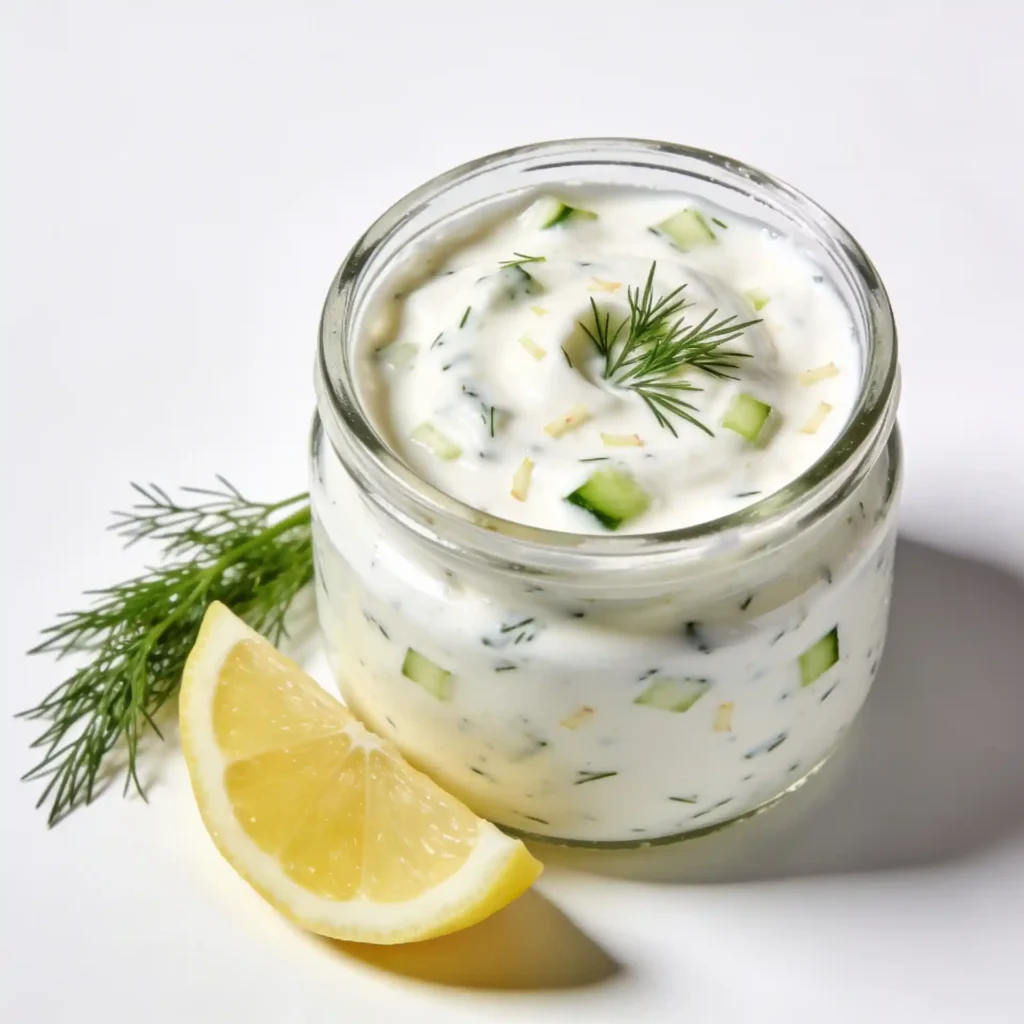
- The Hack: Blending non-fat Greek yogurt with grated cucumber and fresh dill creates a high-protein “Special Sauce.” This probiotic-rich dairy base offers a luxurious mouthfeel without the caloric weight of oil. Research in the Journal of Nutrition suggests that the protein in yogurt can increase satiety and reduce subsequent calorie intake.
- The Moisture Control: The secret to thick Tzatziki is grating your cucumber and then using a kitchen towel to squeeze out every drop of water. This prevents your sauce from becoming watery and keeps the flavors concentrated.
- The Flavor Emulsion: Mix in minced garlic, lemon juice, and a pinch of salt. This creamy yogurt-based sauce technique is also a staple in my High Protein Chicken Pesto Pasta Salad, proving that healthy swaps can be incredibly delicious while boosting your protein count.
Can you make gyro sauce creamy without mayo or sour cream?
Yes, by utilizing the natural thickness of strained Greek yogurt. When you combine this with the thermic effect of protein, you are creating a dressing that actually helps your body burn more energy during digestion than a traditional oil-based vinaigrette. This makes it the ultimate “Special Sauce” for a High Protein Greek Gyro Salad, allowing you to enjoy a creamy finish without stalling your weight loss progress.
Step-by-Step: How to Prepare a Greek Gyro Salad Like a Pro
Step 1: Marinating and Searing the Gyro Meat for “Crispy Edges”
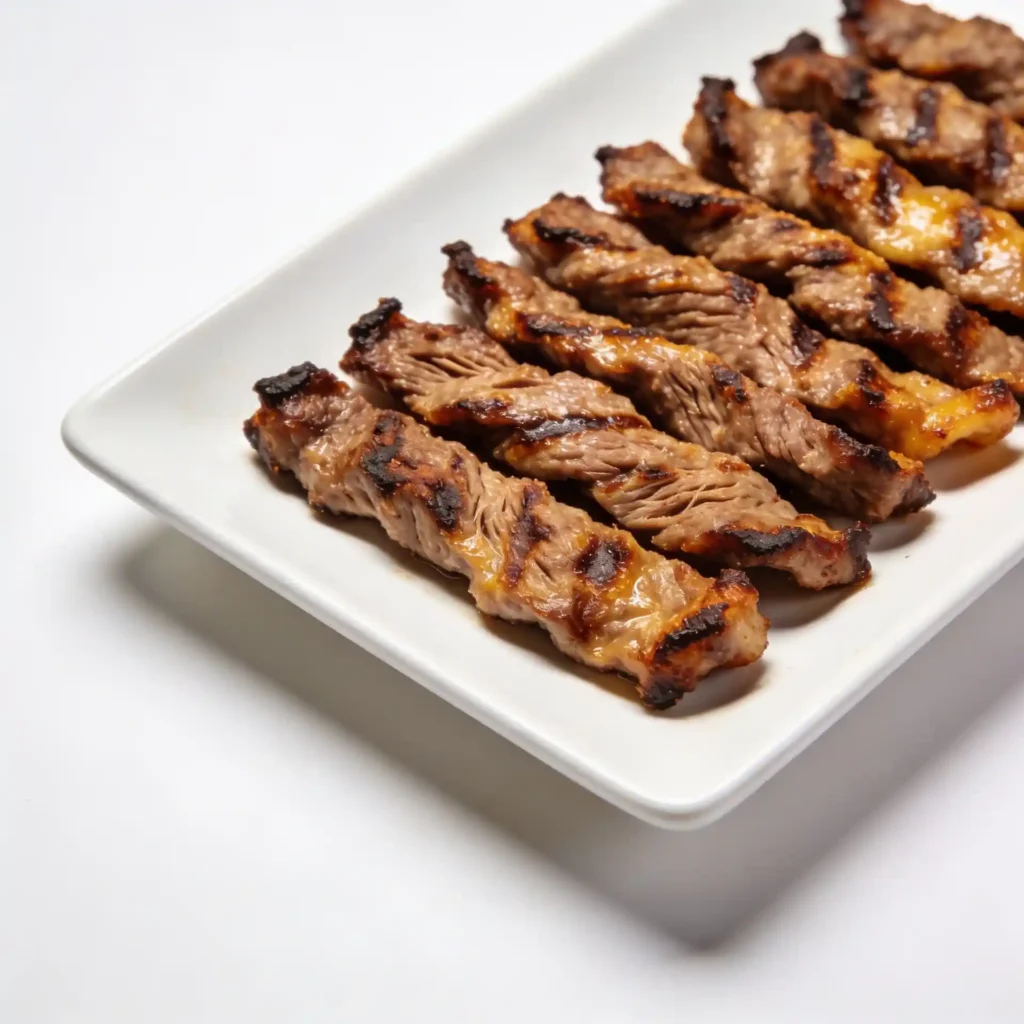
- Marination: Toss your meat in lemon juice, garlic, oregano, and a touch of cumin for 20 minutes. This allows for culinary acidulation, which tenderizes the fibers of the meat, ensuring a juicy result even after a high-heat sear.
- The Sear: Use a cast-iron skillet over high heat. You can see my specific searing temperatures and safety tips in the High Protein Chicken Caesar Salad guide. Do not move the meat for the first 3 minutes; this ensures the chemical reactions create those savory, crispy edges that define a classic street gyro experience.
Step 2: The “Micro-Chop” for Traditional Greek Salad Bases
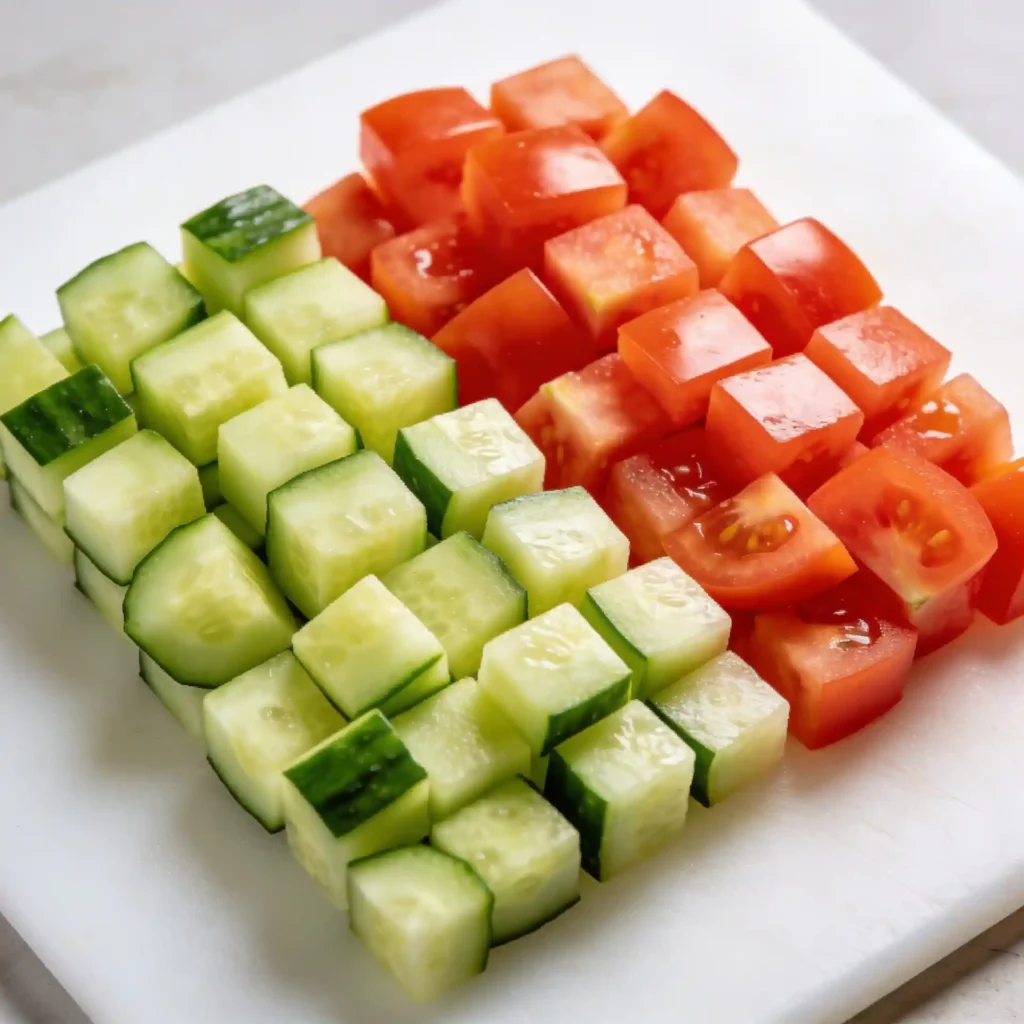
- Uniformity: Use the “Micro-Chop” technique to dice your cucumbers and tomatoes to a uniform 0.5-inch size. I use this same uniform dicing technique in my Buffalo Chicken Chopped Salad to ensure you get a “perfect bite” of every ingredient in every single forkful.
- Coating: Small, uniform dicing allows the greek yogurt tzatziki dressing to coat every surface area more effectively, ensuring the salad isn’t “dry” even without the use of heavy oils.
Step 3: Layering the Warm Protein Over Cold Greens
- Temperature Contrast: Place your cold veggies and feta at the bottom of the bowl. Layer the warm, seared gyro meat on top at the very last second. This contrast in temperature is a hallmark of professional greek chicken gyro salad preparation and keeps the Romaine from wilting before you take your first bite, maintaining that bistro-quality texture.
Pro Tips: How to Meal Prep Gyro Salads for the Week
How do you keep gyro salad from getting watery?
The “Watery Tzatziki” issue is usually caused by cucumber moisture release over time.
- The Salt Hack: Salt your grated cucumbers for 5 minutes, then squeeze them. This removes the excess water that would otherwise leak into your salad bowl overnight and cause oxidative browning of the fresh herbs and a diluted dressing.
- The Barrier Method: Store your seared meat and Tzatziki in separate containers from the fresh vegetables. This is essential for maintaining the crisp integrity of a High Protein Greek Gyro Salad for multiple days.
Can you meal prep greek gyro salad for work lunches?
Absolutely. Store the romaine and diced vegetables in one large container, the meat in a second, and the Tzatziki in a small 2 oz dressing cup. Reheat the meat for 30 seconds before adding it to the cold greens. For more storage secrets and “soggy-proofing” tips, check my Buffalo Chicken Cold Lunchbox guide. This ensures your High Protein Greek Gyro Salad stays restaurant-fresh for up to 4 days.
High Protein Greek Gyro Salad Variations
1. The Gyro Pasta Salad Hybrid
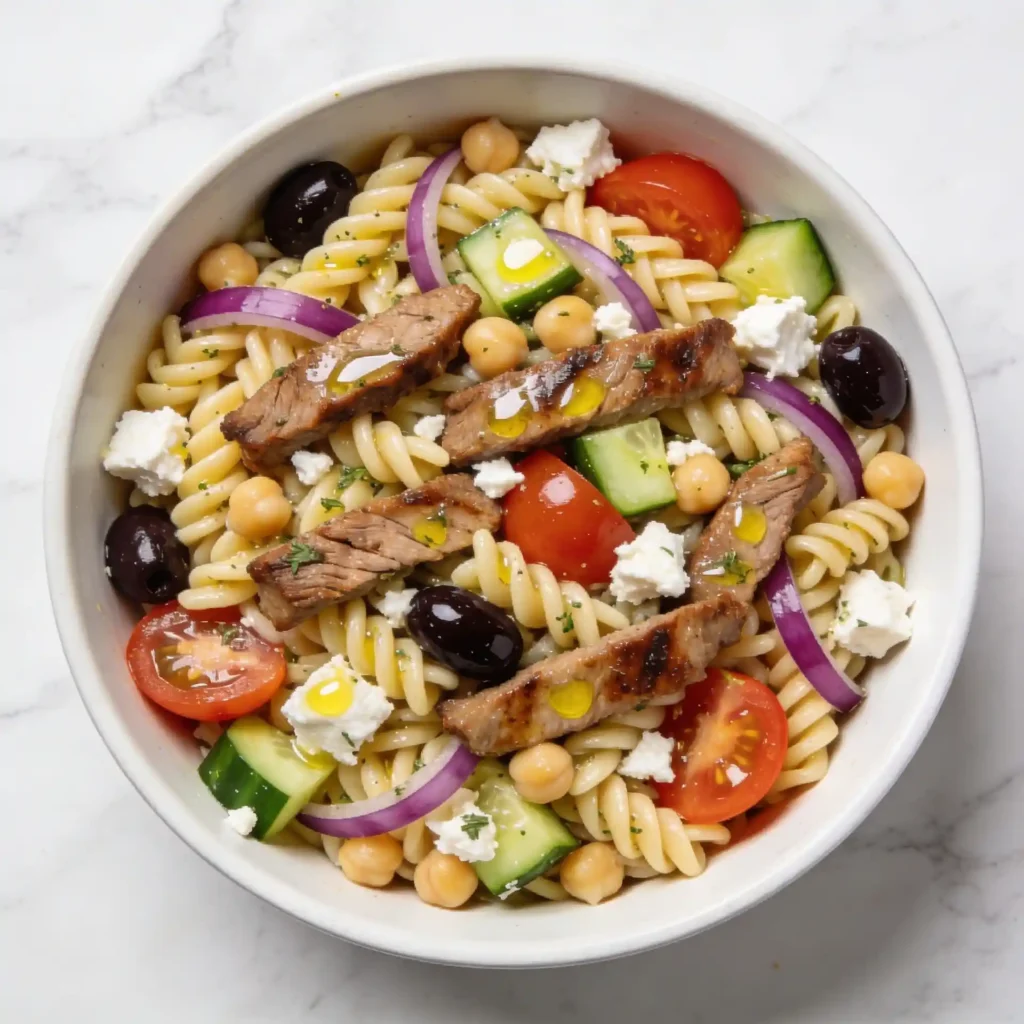
If you have a high-activity day planned and need more complex carbohydrates for sustained energy, toss these herby gyro flavors with the chickpea noodles from my High Protein Greek Orzo Salad. The orzo acts as a fantastic vehicle for the creamy Tzatziki, making for a hearty and portable lunch that stays fresh for days in the fridge.
2. Italian-Greek Fusion Twist
For a bold, salty variation, mix in the ribbon-cut deli meats from my High Protein Italian Antipasto Salad. The combination of bresaola and gyro-seasoned chicken creates a unique flavor profile that doubles down on lean protein density while satisfying every savory craving with a Mediterranean-Italian flare.
3. Coastal Gyro with Lemon Garlic Shrimp
Swap the beef or lamb for grilled shrimp. I recommend swapping the meat for the shrimp prep found in my High Protein Shrimp Avocado Salad to ensure your seafood is perfectly seasoned and seared for this coastal twist. Shrimp is incredibly lean and pairs perfectly with the lemon-dill notes of the greek yogurt tzatziki dressing.
Frequently Asked Questions (FAQs)
What is a Greek gyro salad?
A Greek Gyro Salad is a deconstructed version of the traditional gyro wrap, featuring seasoned, seared meat served over a bed of Mediterranean vegetables with a creamy yogurt sauce.
Can you make Sonoma chicken salad style fruit swaps in a gyro?
While the gyro is primarily savory, adding a few sliced grapes can provide a beautiful balance of sweet and salty, much like the fruit balance in my Sonoma Chicken Salad. Discussing the balance of savory vs sweet is a great way to experiment with your palate.
How long does Greek gyro salad last in the fridge?
The seared meat and Tzatziki last up to 4 days, while the romaine base is best consumed within 48 hours for maximum crispness.
What can you serve with a gyro salad to make it a full meal?
If you need extra energy or a side for the family, pair this salad with my Garlic Cheesy Breadsticks for a satisfying, high-protein side that complements the Mediterranean flavors perfectly.
Can you make this recipe with rotisserie chicken?
Yes! Simply shred the rotisserie chicken and toss it with extra oregano and lemon juice before a quick 2-minute sear in a hot pan.
Why does my tzatziki get watery overnight?
This is usually due to the cucumbers releasing moisture. Ensure you squeeze them completely dry with a towel before mixing with the yogurt to maintain a thick, professional consistency.
Conclusion: Your New Mediterranean Favorite
This Greek Gyro Salad delivers the nostalgic “comfort food” feeling of your favorite street-side gyro while staying completely aligned with your healthy weight loss goals. By mastering the “Micro-Chop” and utilizing a protein-dense greek yogurt tzatziki dressing, you are enjoying 45g of protein in a meal that is as fresh as it is filling. It is the ultimate proof that you can hit your macros without ever feeling like you are on a restrictive diet.
Ready for more protein packed salad ideas to transform your weekly routine? Check out my master guide for High Protein Lunch Ideas! Ready for a bold takeout flavor? Try my Thai Peanut Chicken Salad next!